From Fortune to Pocket Change: The Astonishing Price Drop of Consumer Electronics Over 70 Years
From Fortune to Pocket Change: The Astonishing Price Drop of Consumer Electronics Over 70 Years
Picture your grandfather in 1954, standing in a department store, jaw slack, staring at a glowing color television set. He's not mesmerized by the picture quality — he's doing the math in his head. That TV costs $1,175. In today's dollars, that's somewhere north of $13,500. He walks out empty-handed. Most Americans did.
Fast forward to this weekend, and you can walk into a big-box store and walk out with a 55-inch 4K smart TV for under $400. Something has changed — radically, almost unbelievably — in the relationship between American consumers and their electronics. And when you lay the numbers side by side, the transformation is genuinely staggering.
The Color TV That Cost More Than a Car
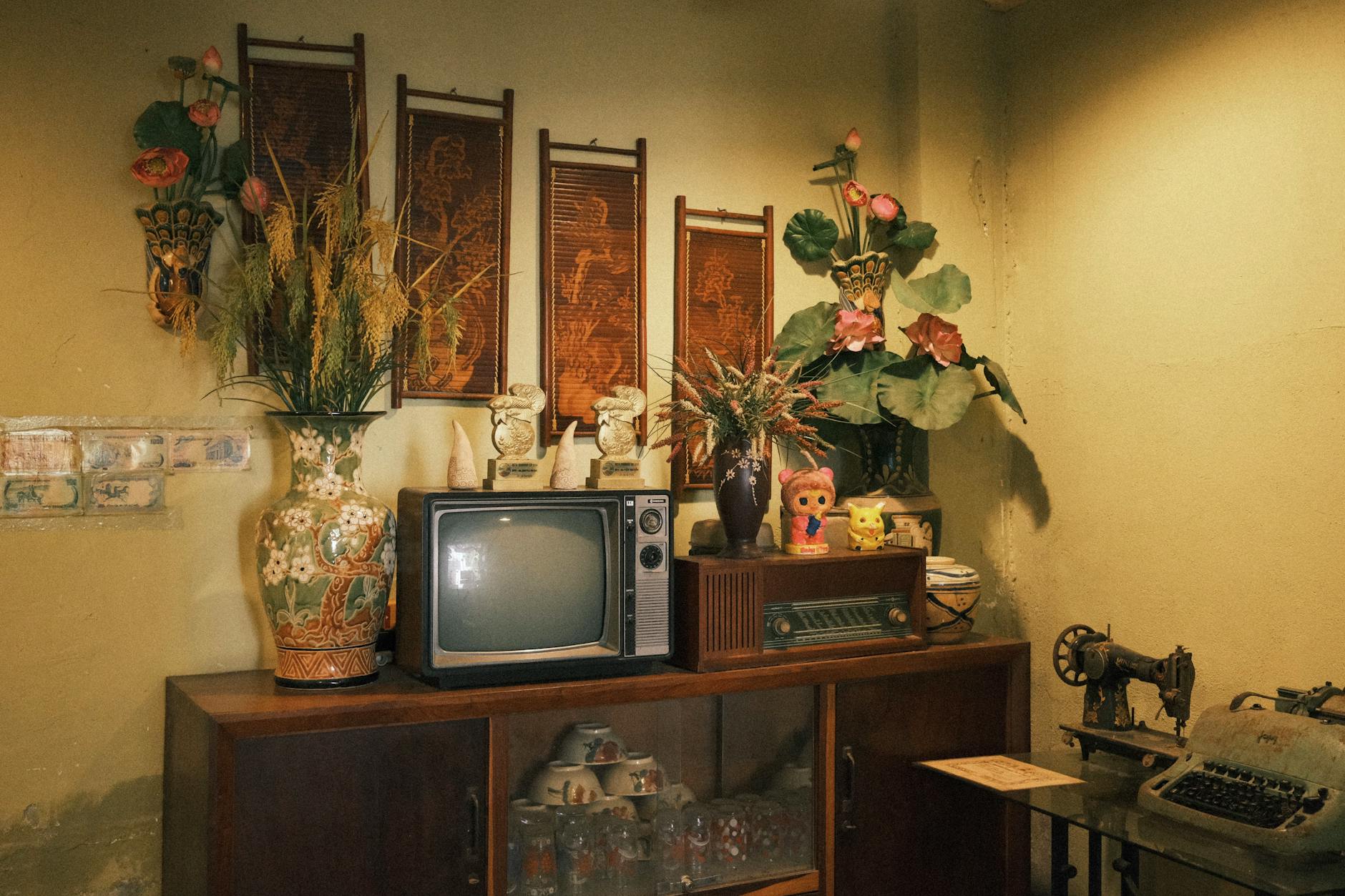
When RCA rolled out its first commercial color television sets in 1954, they weren't marketing to the average family. The CT-100 model retailed at $1,000 — roughly $11,500 in 2024 dollars. For context, a brand-new Chevrolet Bel Air that same year cost around $1,800. People were being asked to spend more than half the price of a new automobile just to watch I Love Lucy in color.
Unsurprisingly, most households stuck with black-and-white sets for years. Color TV didn't reach majority adoption in American homes until the late 1960s, and even then, it was a significant household investment. The idea that a television could be a throwaway purchase — something you'd grab impulsively during a Black Friday sale — would have seemed like science fiction.
By 1972, a mid-range color TV ran about $500, which sounds more reasonable until you adjust it: that's nearly $3,700 today. Families saved up. They deliberated. They kept the same set for a decade or more and had it repaired when it broke, because replacing it simply wasn't an option.
The $4,000 Phone That Fit in a Briefcase
The television's price collapse looks almost modest compared to what happened with mobile phones. When Motorola introduced the DynaTAC 8000X in 1984 — the first commercially available handheld cellular phone — it retailed at $3,995. Adjusted for inflation, you're looking at well over $12,000 in today's money.
And what did you get for that? A device that weighed nearly two pounds, offered 30 minutes of talk time, and took roughly 10 hours to charge. There was no texting. No camera. No apps. It made phone calls, and it did so loudly enough that everyone around you knew you were making one.
The DynaTAC wasn't bought by regular people. It was bought by Wall Street traders, real estate developers, and executives who needed to signal — loudly — that they had arrived. The cell phone was a status symbol in the most literal sense, and its $4,000 price tag was the velvet rope.
Today, a flagship iPhone or Samsung Galaxy runs $800 to $1,200 — a significant purchase, sure, but one that fits within the budget of a wide swath of American consumers. And for a few hundred dollars less, you can get a device that outperforms those early flagships by every measurable standard.
Home Computers: From Luxury Lab Equipment to Everyday Tool
The story repeats itself with home computers. The Apple II, released in 1977, started at $1,298 — roughly $6,600 in today's dollars. It had no hard drive, no mouse, and a screen that displayed a limited palette of blocky colors. Buyers were mostly hobbyists, educators, and early adopters with disposable income and a high tolerance for complexity.
The IBM PC arrived in 1981 at $1,565 (over $5,300 today) and was similarly out of reach for most households. Even as prices gradually fell through the 1980s and early '90s, a functional home computer setup with a monitor and printer could easily run $2,000 to $3,000 — a purchase that required serious family discussion.
Now? A Chromebook capable of handling the vast majority of everyday computing tasks costs under $300. A mid-tier laptop runs $500 to $700. The raw processing power available to a kid doing homework today dwarfs what NASA used to land astronauts on the moon.
What Actually Drove the Drop?
This isn't just a story about companies getting nicer. The price collapse in consumer electronics comes down to a few powerful forces working in tandem.
First, Moore's Law — the observation that the number of transistors on a microchip doubles roughly every two years — meant that computing power got dramatically cheaper over time, almost like clockwork. Second, global manufacturing scale brought production costs down as factories in Asia industrialized and supply chains became brutally efficient. Third, competition between brands kept margins thin and pushed companies to pass savings on to consumers.
The result is a world where the most powerful computer most Americans have ever owned fits in their shirt pocket and cost less than a car payment.
Rethinking What 'Expensive' Really Means
There's a tendency to look at a $1,000 smartphone and feel a sting of sticker shock. And that reaction isn't entirely wrong — it's real money. But it's worth pausing to consider what that same $1,000 bought your grandparents in the electronics aisle.
A single, clunky, non-internet-connected color television. One device. No updates, no ecosystem, no global communication network in your palm.
The electronics in your living room, your pocket, and your kitchen drawer represent one of the most dramatic and sustained price collapses in the history of consumer goods. Your grandfather paid a small fortune for a TV that couldn't talk back. You're complaining that yours was only on sale for $279.
Somewhere, he'd probably get a kick out of that.