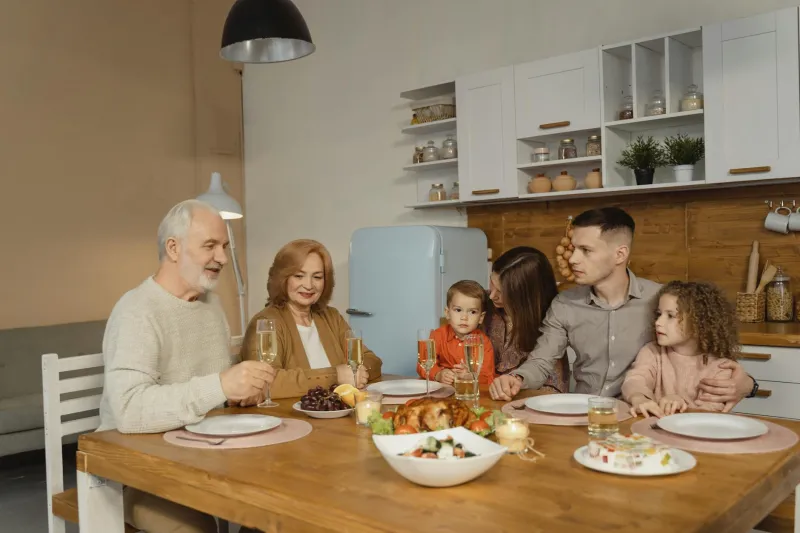
The Saturday Night Preparation Ritual
In households across America during the 1950s and 60s, Saturday evening wasn't the end of the week—it was the beginning of Sunday dinner preparation. Grandmothers would start soaking beans, mothers would begin marinating roasts, and even children had their roles in what was essentially a 24-hour cooking marathon that culminated in the most important meal of the week.
The preparation was as much a part of the tradition as the meal itself. Families would make special trips to the butcher for the perfect cut of meat, visit multiple stores to gather ingredients, and spend hours in the kitchen creating dishes that couldn't be rushed or simplified. The Sunday roast wasn't just food—it was an investment of time, money, and care that demonstrated how much the family gathering meant.
These weren't casual affairs. The good china came out, cloth napkins replaced paper ones, and the dining room table was set with the kind of ceremony usually reserved for holidays. Children were expected to dress up, adults put on their Sunday best even after returning from church, and the entire house was cleaned in preparation for what was often the only time all week when the family would sit together for more than a few minutes.
When Everyone Showed Up Hungry
Sunday dinner had an almost gravitational pull in American family life. Adult children who had moved out would return with their own families. Grandparents, aunts, uncles, and cousins would gather around tables that groaned under the weight of multiple courses. The meal typically began around 2 PM and could stretch well into the evening, with conversation flowing as freely as the sweet tea or coffee.
The menu followed predictable patterns that varied by region and ethnicity but shared common elements: a substantial main course, multiple side dishes, fresh bread, and dessert that was always homemade. In the South, it might be fried chicken, mashed potatoes, green beans, cornbread, and peach cobbler. In the Midwest, pot roast, carrots, potatoes, dinner rolls, and apple pie. Italian-American families might gather around pasta, meatballs, and multiple vegetables, while Jewish families might feature brisket, kugel, and challah bread.
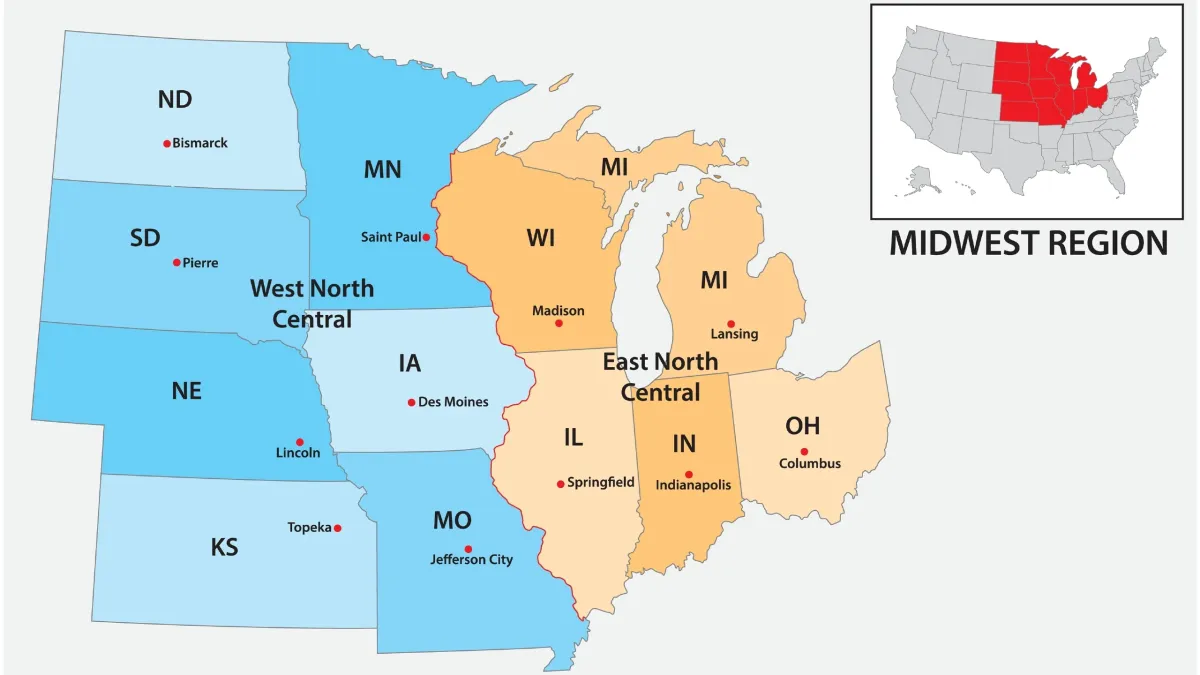 Photo: the Midwest, via www.mappr.co
 Photo: the South, via mapsof.net
But the food, elaborate as it was, served a purpose beyond nutrition. It was the anchor for conversations that couldn't happen any other time. Grandparents shared family history, parents caught up on their children's lives, and cousins reconnected across the distances that daily life had created. These dinners were where family news was shared, disputes were settled, and traditions were passed down from one generation to the next.
The Slow Disappearance of Sacred Time
The decline of the Sunday dinner didn't happen overnight. It eroded gradually as American life became more complex and individualized. Women entering the workforce in larger numbers meant fewer people available for the intensive preparation these meals required. Divorce rates increased, scattering families geographically and emotionally. Children's sports leagues began scheduling games on Sundays, breaking up the one day families had previously protected for togetherness.
Suburban sprawl played a role too. As families moved farther apart, the casual Sunday visit became a planned expedition requiring significant time and gas money. The informal networks of extended family that had made these gatherings possible began to fray as people prioritized nuclear family time over extended family obligations.
Restaurants began staying open on Sundays, offering families an alternative to the hours of cooking and cleanup that Sunday dinner required. What had once been unthinkable—eating out on the Lord's day—became not just acceptable but convenient. The rise of television also competed for family attention, making it easier to grab individual plates and eat in front of the TV rather than gathering around a formal table.
Today's Fragmented Food Culture
Modern American families eat differently than their grandparents could have imagined. Meals are often consumed individually, on different schedules, and in different locations. Children eat in their rooms while doing homework, parents grab dinner during their commute home from work, and family meals—when they happen at all—are often quick affairs squeezed between activities.
Food delivery apps have made it possible to satisfy individual preferences without compromise. Instead of everyone eating the same meal together, family members can order exactly what they want, when they want it, delivered directly to their door. The shared experience of eating the same food, prepared by family members, has been replaced by the convenience of personalized choice.
Sunday has lost its special status in American culture. It's become another day for shopping, working, traveling, and individual pursuits. The idea of spending an entire afternoon around a dinner table can seem almost foreign to families accustomed to constant activity and stimulation.
What We Lost When We Lost the Table
The disappearance of the Sunday dinner represents more than just a change in eating habits—it reflects a fundamental shift in how Americans think about family, community, and time itself. Those long, leisurely meals served purposes that our efficiency-focused culture has struggled to replace.
They were weekly opportunities for different generations to connect, for family stories to be shared and preserved, and for children to learn the social skills that come from extended conversation with adults. The Sunday table was where families worked through conflicts, celebrated successes, and maintained the bonds that held them together through difficult times.
The ritual also taught patience and presence in ways that modern life rarely does. Sitting through a multi-course meal required children to develop attention spans and social skills that can't be learned through screens or structured activities. The Sunday dinner was perhaps America's last widespread practice of slow living—a weekly reminder that some things can't and shouldn't be rushed.
While modern families have gained flexibility, convenience, and individual choice, they've lost something harder to quantify: the regular practice of showing up for each other, of making time for connection even when it's inconvenient, and of creating shared experiences that bind people together across differences in age, personality, and life circumstances.
The sacred Sunday table hasn't disappeared entirely—some families maintain the tradition, and others have created new versions adapted to contemporary life. But for most Americans, the weekly gathering that once anchored family life has become a memory rather than a reality, leaving us to wonder whether our efficiency gains have come at the cost of something irreplaceable.