The Stranger Behind the Counter Who Knew Your Soul: How Record Store Clerks Once Ruled America's Musical Taste
In 1987, sixteen-year-old Sarah Chen walked into Vintage Vinyl in St. Louis with twenty dollars and no idea what she wanted to buy. She knew she liked Madonna and Prince, but felt ready for something different. Behind the counter stood Marcus, a twenty-something guy with thick glasses and strong opinions about everything. He listened to her describe her taste, disappeared into the stacks for five minutes, and returned with three albums: The Smiths' "The Queen Is Dead," Talking Heads' "Remain in Light," and X's "Los Angeles."
"Trust me," he said. "Start with The Smiths."
Thirty-five years later, those three albums remain among Sarah's most treasured possessions, and The Smiths became her gateway into decades of musical exploration. Marcus, a complete stranger, had somehow understood her musical soul better than she understood it herself.
Today, Spotify's algorithm knows that Sarah listens to indie rock, post-punk, and new wave. It can instantly generate personalized playlists based on her listening history, mood, and even the time of day. But it will never be able to recreate that moment when a human being looked her in the eye, took a chance, and changed her musical life forever.
The Gatekeepers of Sound
Before the internet democratized music discovery, Americans encountered new music through a surprisingly small network of human gatekeepers. Radio DJs chose what played on the airwaves. Music journalists decided what got reviewed in magazines. And record store employees — often underpaid, overeducated music obsessives — wielded enormous influence over what ordinary people actually bought and took home.
These weren't algorithms trained on millions of data points. They were humans with personal taste, cultural biases, and the ability to read social cues. A good record store clerk could size up a customer in thirty seconds: the nervous teenager trying to look cool, the middle-aged dad wanting to reconnect with his youth, the serious collector hunting for rare pressings.
The system was imperfect, subjective, and often elitist. But it was also deeply social, creating connections between strangers and building communities around shared musical discovery.
The Art of the Hand-Sell
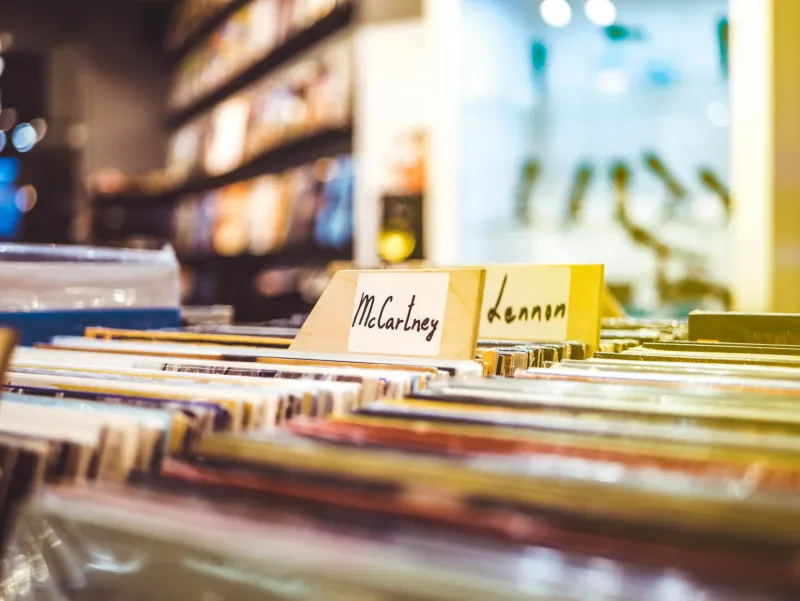
Record stores in the 1970s, 1980s, and 1990s operated as informal cultural institutions. The employees weren't just cashiers — they were curators, educators, and taste-makers who took their role seriously. Many had encyclopedic knowledge of music history and could trace connections between genres, decades, and artists that customers would never discover on their own.
The "hand-sell" became an art form. A skilled clerk could look at a customer's purchase — say, a Nirvana album and a Soundgarden CD — and suggest something that would expand their musical horizons: maybe some earlier punk like The Replacements, or some grunge predecessors like Hüsker Dü.
These recommendations carried weight because they came with social proof. The clerk was risking their reputation and the customer's money on their suggestion. If they recommended too many duds, customers would stop trusting them. If they consistently turned people onto great music, they'd build a following of customers who would seek out their advice.
The Friction That Created Culture
The old system of music discovery was full of friction. Finding new music required effort: reading reviews, listening to radio, visiting stores, talking to people. You couldn't instantly sample every song ever recorded. You had to make choices based on incomplete information — album covers, band names, recommendations from strangers.
This friction, which seemed inefficient at the time, actually created something valuable: shared cultural experiences. When a record store clerk in Seattle recommended the same album to dozens of customers, those people were all discovering the same music at roughly the same time. They'd hear it on the radio, see the band at local venues, and encounter other fans at coffee shops and concerts.
The limitations of the system — the fact that most people heard the same radio stations, shopped at the same record stores, and read the same music magazines — created a common cultural vocabulary that transcended individual taste.
The Algorithm's Promise
Today's music discovery systems are technological marvels that would have seemed like science fiction to Sarah Chen in 1987. Spotify analyzes hundreds of factors to understand your musical preferences: what you skip, what you replay, what you save, even what time of day you listen to different genres.
The algorithm knows that you prefer songs in minor keys on rainy days, that you're more likely to discover new music on Friday afternoons, and that you tend to skip tracks longer than four minutes when you're working out. It can instantly generate playlists tailored to your exact mood and situation, drawing from a library of over 80 million songs.
This personalization is incredibly convenient and often surprisingly accurate. The algorithm can introduce you to obscure artists from other countries that perfectly match your taste, something Marcus at Vintage Vinyl could never have done.
What We Lost in Translation
But something important was lost in the transition from human recommendation to algorithmic curation. The old system was social and surprising in ways that algorithms struggle to replicate. Marcus could recommend The Smiths to Sarah not just because he thought she'd like them, but because he believed they would challenge her, expand her worldview, and connect her to a larger cultural conversation.
Algorithms are designed to give you more of what you already like. They're risk-averse systems optimized for engagement and satisfaction, not for growth or surprise. They'll recommend artists similar to ones you already enjoy, but they're less likely to suggest something that might initially sound strange but could become life-changing with repeated listening.
The human element also created accountability and relationship. Sarah could return to Vintage Vinyl the next week and tell Marcus what she thought of his recommendations. If she loved The Smiths but hated X, he could adjust his understanding of her taste and make better suggestions next time. The algorithm gets this feedback too, but it processes it as data rather than conversation.
The Loneliness of Perfect Curation
Modern music discovery is more efficient but often more isolating. Your Spotify Discover Weekly playlist is perfectly tailored to your individual taste, but it's also perfectly unique to you. The person sitting next to you on the subway is listening to a completely different set of recommendations, creating parallel musical universes that rarely intersect.
The record store created accidental communities. People browsed the same bins, overheard the same conversations, and received recommendations from the same passionate clerks. You might discover a new band because you happened to be standing near someone else's conversation, or because the store was playing something interesting over the sound system.
These chance encounters are harder to replicate in a digital world where everyone receives personalized recommendations in private. We've gained precision but lost serendipity.
The Verdict of Progress
Today's music discovery systems are undeniably more democratic and accessible than the old gatekeeping model. You don't need to live near a good record store or befriend a knowledgeable clerk to discover great music. The algorithm doesn't judge you for liking pop music or dismiss your taste as uncool.
But Sarah Chen, now in her fifties and still discovering new music through Spotify, sometimes misses the weight and ceremony of those old record store interactions. The algorithm knows her taste better than Marcus ever could, but it will never care about her musical education the way he did.
Perhaps the real loss isn't the accuracy of the recommendations, but the humanity of the process — the feeling that someone, somewhere, thought you might be ready to hear something that could change your life.