The Kitchen Used to Be a Full-Time Job — And Somebody Had to Work It
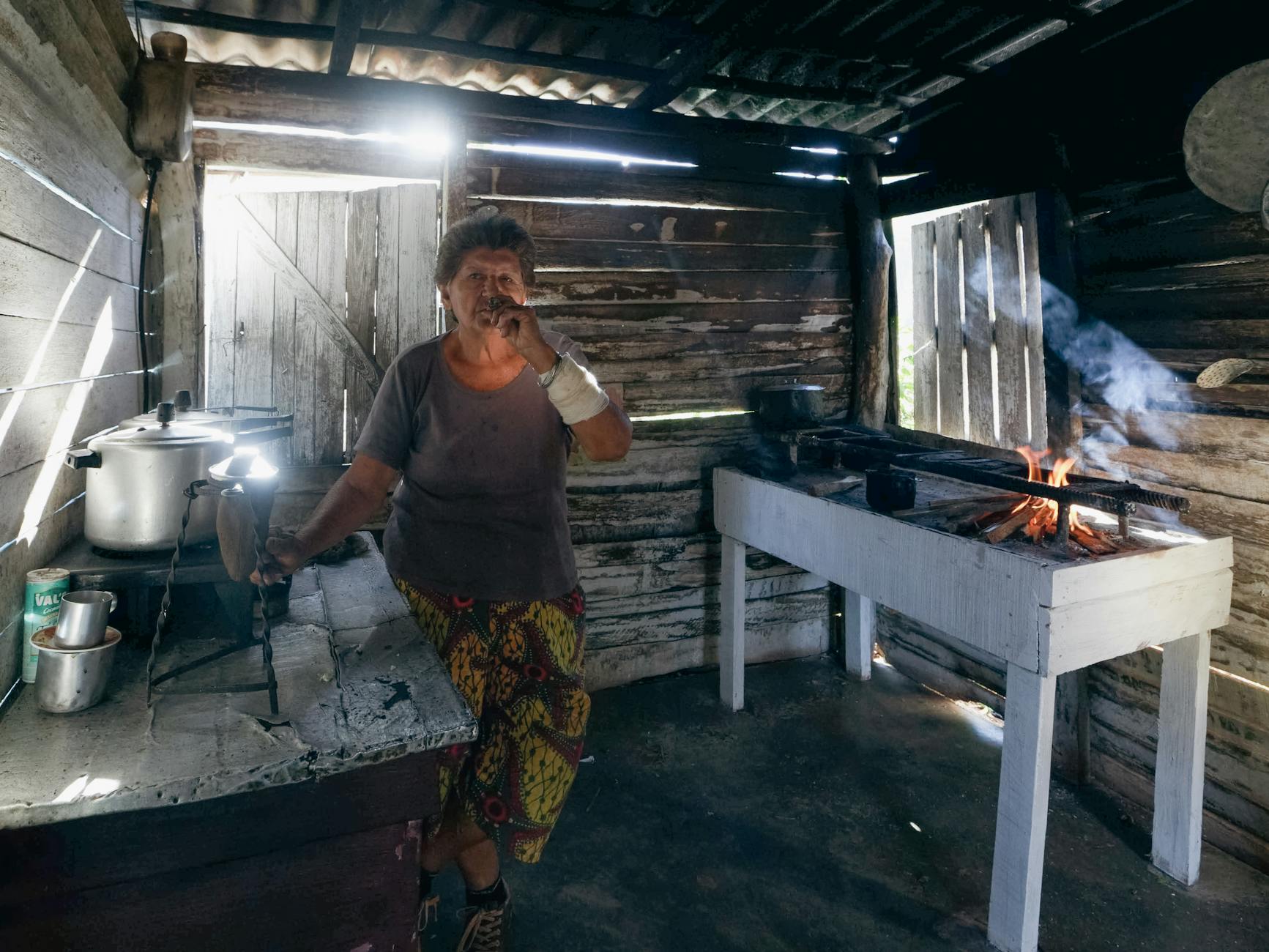
The Kitchen Used to Be a Full-Time Job — And Somebody Had to Work It
There is a particular kind of exhaustion that doesn't fully translate across time. The kind that comes from waking before dawn to stoke a coal stove, hauling water, grinding grain, managing an icebox that's already starting to smell, and beginning the long, slow process of producing food for people who will eat it in twenty minutes and return to their lives.
For the majority of American women in the early 20th century, that was not a bad day. That was Tuesday.
What Cooking Actually Meant in 1910
The modern kitchen — with its electric range, refrigerator, microwave, dishwasher, and cabinet full of canned and frozen goods — is so far removed from its early 20th century predecessor that the two spaces barely deserve the same name.
In 1910, most American households outside major cities still cooked on wood or coal-burning stoves. These weren't simple appliances you switched on. They required constant management: loading fuel, regulating airflow through dampers, monitoring temperature by hand, and cleaning out ash regularly. Getting the stove to the right temperature for baking bread was a skill developed over years, not a setting you dialed in.
Refrigeration meant an icebox — a literal insulated cabinet that held a large block of ice delivered by the iceman, typically once or twice a week. Perishables had to be used quickly or they were lost. There was no freezer. There was no keeping leftovers for three days. Meal planning was driven not by preference but by the cold logic of what would spoil first.
Basic ingredients arrived in raw, unprocessed form. Coffee beans needed grinding. Flour came in large sacks and required sifting. Butter was sometimes churned at home. Stocks and broths were made from scratch because there was no alternative. A roast chicken dinner wasn't a weekend project — it was a multi-hour undertaking on any given weeknight, preceded by the acquisition, cleaning, and preparation of an actual chicken.
And all of this, in the overwhelming majority of households, was the responsibility of women.
The First Wave: Cans, Electricity, and Ice-Free Cold
Change came in waves, and the first significant one arrived well before most people realize. Commercial canning had existed since the Civil War era, but it was the early 20th century that saw canned goods become genuinely accessible to working-class American families. Campbell's condensed soup, introduced in 1897, wasn't just a product — it was a small act of domestic liberation. A can of tomato soup on the shelf meant one fewer thing that required hours of preparation.
Electric ranges began appearing in American homes in the 1920s and spread through the 1930s and 1940s as rural electrification expanded. The difference was profound. A consistent, controllable heat source that required no fuel management and no ash cleanup transformed the daily experience of cooking almost immediately. Baking, in particular, became far more predictable.
The mechanical refrigerator — first available for home use in the 1910s and increasingly affordable through the 1930s — quietly eliminated one of the most persistent anxieties of domestic life: the fear that your food wouldn't last. Suddenly, leftovers were possible. Meal prep across multiple days was possible. The constant pressure to cook and consume before things spoiled began to ease.
The Mid-Century Kitchen and the Convenience Revolution
World War II accelerated the convenience food trend in unexpected ways. Food technology developed for military rations — dehydrated products, concentrated ingredients, shelf-stable goods — filtered into the civilian market after the war ended. Returning soldiers and their families encountered a postwar consumer economy that was actively selling them time back.
Frozen foods, pioneered by Clarence Birdseye in the 1920s, became genuinely mainstream in the 1950s as home freezers proliferated. And then, in 1954, Swanson introduced the TV dinner: a complete meal — turkey, stuffing, sweet potatoes, peas — pre-portioned in an aluminum tray, ready to heat and eat in 25 minutes. It sold ten million units in its first year.
The symbolism was impossible to miss. The TV dinner wasn't just a product. It was a statement about what American family life was becoming: faster, more screen-centered, less bound to the kitchen table as the gravitational center of daily existence.
The Microwave and the Final Surrender of the Clock
Microwave ovens, first available commercially in the late 1940s but not common in American homes until the 1970s and 1980s, completed a transformation that canned goods and frozen dinners had started. Reheating food went from a 20-minute stovetop process to a two-minute button press. Frozen meals designed specifically for microwave cooking made the gap between hunger and eating almost negligible.
By the 1990s, the American kitchen had been so thoroughly mechanized and stocked with shortcuts that the question was no longer whether a family could cook quickly — it was whether they wanted to cook at all.
The Meaning of 'Home Cooking' Has Shifted
Today, meal-kit delivery services like HelloFresh and Blue Apron offer pre-portioned, pre-planned ingredients with step-by-step instructions, collapsing the planning and shopping burden while preserving the act of cooking itself. Air fryers have developed an almost cultlike following for their ability to produce crispy, satisfying food in a fraction of traditional oven time. And for many Americans, a "home-cooked meal" increasingly means assembling components — rotisserie chicken from the grocery store, bagged salad, pre-made sauce — rather than building anything from raw ingredients.
None of this is a moral failure. It's the logical endpoint of a century of innovation explicitly designed to reduce the time and labor that cooking demands.
But it's worth sitting with what was lost alongside what was gained. The kitchen of 1910 was a place of genuine hardship and inequity — a space where one person's exhaustion produced everyone else's comfort. The kitchen of today offers freedom that previous generations would have found almost miraculous.
The question is what we do with the hours we got back.