When Ashtrays Were Office Equipment: The Era America Worked in a Cigarette Haze
The Universal Cloud
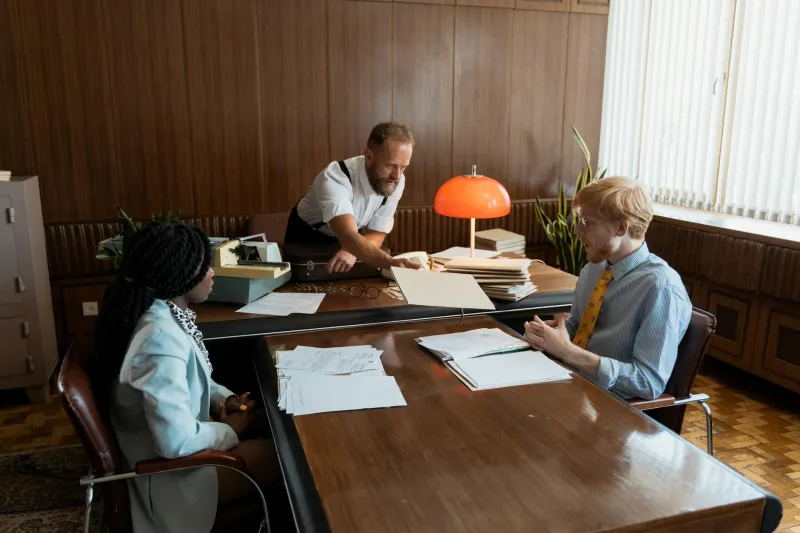
Picture walking into any American office in 1965. Before you notice the typewriters clicking or phones ringing, you'd be hit by something else entirely: a thick, perpetual cloud of cigarette smoke that hung in the air like morning fog. This wasn't the exception—it was the rule. From the mailroom to the boardroom, ashtrays sat on every desk like standard office equipment, right next to the pencil holders and desk calendars.
Today's workers might struggle to imagine spending eight hours a day in what was essentially a smoking lounge with filing cabinets. But for the better part of the 20th century, that's exactly what American work life looked like. The office ashtray wasn't just furniture—it was a necessity.
Smoke Break? More Like Smoke Everything
The concept of a "smoke break" barely existed because smoking never really stopped. Executives lit up during board meetings, secretaries typed with cigarettes dangling from their lips, and factory workers took drags between operating heavy machinery. Hospital nurses smoked at their stations, teachers lit up in faculty lounges between classes, and even airline pilots smoked in cockpits while flying passengers across the country.
The normalization went beyond tolerance—it was active encouragement. Many companies provided free cigarettes to employees as perks. Tobacco companies sponsored office parties and handed out branded ashtrays as promotional gifts. The three-martini lunch came with a pack of cigarettes as standard accompaniment.
The Professional Smoker's Paradise
Certain professions seemed almost designed around cigarette consumption. Newsrooms were legendary for their smoke-filled atmosphere, where journalists chain-smoked through deadline pressure and editors made decisions through nicotine-tinged discussions. Mad Men's depiction of advertising agencies wasn't exaggerated—creative meetings literally happened through clouds of smoke.
Airline cabins represented perhaps the most extreme example. Flight attendants didn't just tolerate passenger smoking; they actively facilitated it, providing matches and emptying ashtrays built into every armrest. The idea of a smoke-free flight was as foreign as expecting passengers to bring their own oxygen masks.
Even hospitals—places theoretically dedicated to health—allowed smoking almost everywhere except operating rooms. Doctors smoked while making rounds, patients lit up in their beds, and waiting rooms resembled tobacco lounges more than medical facilities.
The Workplace Ecosystem of Smoke
Office culture revolved around cigarette rituals. Business deals were negotiated over shared cigarettes. Workplace hierarchies played out through smoking etiquette—who offered cigarettes to whom, who had the fancy lighter, whose brand preferences mattered. The cigarette break became an informal networking opportunity where real decisions often happened away from conference tables.
Ventilation systems weren't designed to handle the constant smoke because nobody considered it a problem requiring solutions. Instead, offices simply accepted the permanent haze as part of the environment, like fluorescent lighting or carpeted floors.
The Tipping Point
The transformation didn't happen overnight, but when it came, the change was dramatic. The 1980s marked the beginning of the end, as mounting health evidence made secondhand smoke impossible to ignore. The first workplace smoking bans seemed radical at the time—how could you possibly prohibit something so fundamental to office culture?
California led the charge with comprehensive workplace smoking bans in the 1990s, followed by other states in rapid succession. What once seemed unthinkable became standard practice within a single generation. The office ashtray went from essential equipment to historical artifact in less than two decades.
The Great Reversal
Today's workplace smoking policies would seem draconian to 1960s workers. Many companies prohibit smoking anywhere on company property, including parking lots. Some employers won't hire smokers at all. The pendulum swung so completely that lighting a cigarette in most modern offices would trigger fire alarms, evacuation procedures, and probably disciplinary action.
Young workers entering today's smoke-free offices have no reference point for understanding how different things used to be. The idea of conducting business while breathing constant secondhand smoke seems as foreign as using typewriters or rotary phones.
The Speed of Cultural Evolution
Perhaps most remarkable is how quickly this transformation happened. A behavior that was not just accepted but actively promoted for decades became completely socially unacceptable in roughly twenty years. Few cultural shifts in American history have been as rapid or complete as the workplace smoking reversal.
The change represents more than just evolving health awareness—it reflects a fundamental shift in how Americans think about individual rights versus collective wellbeing. The same culture that once considered workplace smoking a personal freedom now views it as an assault on others' health.
Looking back, it's hard to believe that breathing other people's cigarette smoke was once considered just part of having a job in America. The smoke-filled office has joined the typewriter pool and the three-martini lunch as relics of a working world that seems almost impossibly different from today's reality.