When Every Call Was a Community Broadcast: The Forgotten Era of America's Shared Phone Lines
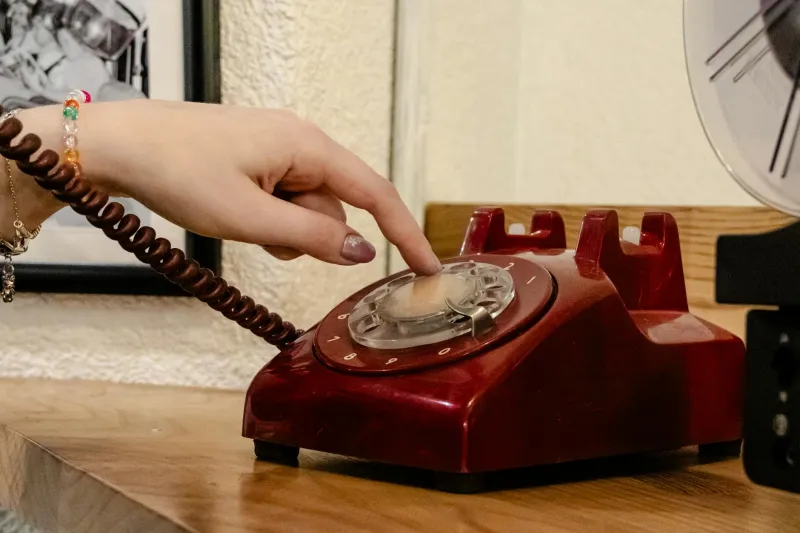
When Privacy Was a Luxury Most Americans Couldn't Afford
Imagine picking up your phone to make a call, only to hear Mrs. Henderson from three houses down discussing her grandson's college plans with someone across town. You clear your throat politely, waiting for her to finish, because you share the same telephone line. This wasn't a nightmare scenario from some dystopian novel — this was everyday life for millions of Americans well into the 1960s and beyond.
The party line system represented one of the most fascinating chapters in American communication history, where technology limitations created an entirely different social fabric around the simple act of making a phone call.
The Economics Behind Shared Conversations
In the early days of telephony, running individual copper wires to every home was prohibitively expensive. Telephone companies solved this problem by creating party lines — single circuits shared among multiple households, typically anywhere from two to twenty families. Each household had a unique ring pattern: two short rings might be yours, while three long rings belonged to the Johnsons next door.
This system made telephone service affordable for working-class families who otherwise couldn't justify the expense of a private line. By the 1940s, over half of all American telephone subscribers were on party lines, particularly in rural areas where the cost of infrastructure was even higher.
The Unwritten Rules of Shared Communication
Party line etiquette became as important as table manners in polite society. Conversations were supposed to be brief — usually limited to three to five minutes — to allow others access to the line. Emergency calls took absolute priority, and anyone monopolizing the line during a crisis faced serious community backlash.
But perhaps most importantly, listeners were expected to hang up immediately if they accidentally picked up during someone else's conversation. The operative word here being "expected" — because human nature being what it is, many neighbors found the temptation of free entertainment irresistible.
When Gossip Had a Direct Line
The party line system created America's first social network, complete with all the drama that implies. Neighbors became inadvertent confidants, learning about affairs, financial troubles, and family disputes through overheard conversations. Some people developed reputations as chronic "rubber neckers" — party line eavesdroppers who made a hobby of listening in on their neighbors' business.
This constant potential for surveillance fundamentally changed how people communicated. Sensitive topics were discussed in code, important business was conducted in person, and many families developed their own shorthand for private matters. The phrase "the walls have ears" took on literal meaning when those ears belonged to Mrs. Peterson down the street.
The Technology That Made Privacy Possible
The transition away from party lines accelerated rapidly in the 1950s and 1960s as telephone infrastructure expanded and costs decreased. Direct Distance Dialing, introduced nationally in 1951, made private lines more practical and affordable. By 1960, party line usage had dropped significantly in urban areas, though rural communities held onto shared lines well into the 1980s.
The shift represented more than just technological progress — it marked a fundamental change in American privacy expectations. The generation that grew up with party lines had learned to assume their conversations might be overheard. Their children, raised with private lines, developed entirely different assumptions about communication privacy.
From Shared Lines to Personal Devices
Today's communication landscape would seem like science fiction to party line users. We carry private computers in our pockets capable of encrypted conversations with anyone on Earth. We can video chat with relatives across continents, send messages that disappear after reading, and communicate through dozens of different platforms and apps.
Yet this abundance of communication options has created its own challenges. Where party line users worried about neighbors overhearing their conversations, we now worry about corporations collecting our data and government surveillance. The desire for privacy in communication remains constant — only the threats have evolved.
The Social Fabric We Lost
While few people would voluntarily return to the days of shared phone lines, the party line era did create something we've arguably lost: unintentional community connection. Neighbors knew each other's voices, celebrated each other's good news, and rallied together during emergencies. The forced interaction, however intrusive, created social bonds that today's isolated communication systems struggle to replicate.
Party lines also democratized information in ways we don't fully appreciate. In an era before 24-hour news cycles, neighbors often learned about local events, weather warnings, and community news through overheard conversations. The local gossip network, while problematic in many ways, also served as an informal community information system.
When Every Call Was a Performance
Perhaps most remarkably, party line culture taught Americans that every phone conversation was potentially a public performance. People developed skills in diplomatic language, learned to discuss sensitive topics obliquely, and became masters of reading between the lines. These communication skills, born from necessity in the party line era, represented a sophistication in interpersonal communication that our current direct, text-based culture sometimes lacks.
The party line era reminds us that privacy in communication — something we now consider a basic right — is actually a relatively recent luxury in human history. As we navigate new challenges around digital privacy and surveillance, perhaps there's wisdom to be found in understanding how previous generations balanced community connection with personal privacy, even when that balance was imposed by the technology of their time.