When Paper Maps Were Pocket Compasses: How America Learned to Stop Navigating and Start Following
The Last Generation of Real Navigators
There's a particular type of anxiety that younger Americans will never experience: the stomach-dropping moment when you realize you've been driving in the wrong direction for 45 minutes, and your carefully folded AAA TripTik is suddenly as useful as origami.
For decades, American road trips required genuine skill. You needed to understand cardinal directions, read topographical clues, and develop an internal compass that could sense when something felt "off." Most importantly, you had to accept that getting lost wasn't a technological failure—it was part of the adventure.
Today, that entire relationship with space and direction has vanished. We've traded navigation for following, exploration for efficiency, and the satisfaction of figuring things out for the convenience of being told what to do.
The Ritual of the Paper Map
Before GPS, planning a cross-country drive was a ceremony. Families gathered around kitchen tables with state maps spread like battle plans, tracing routes with highlighters and calculating mileage with rulers. Gas stations sold more than fuel—they were information hubs where attendants doubled as local guides, sketching shortcuts on napkins and warning about construction delays three states away.
The physical act of unfolding a map created a relationship with geography that smartphones can't replicate. You could see your entire journey at once: the mountain ranges you'd cross, the rivers you'd follow, the small towns that existed only as dots between major cities. Maps taught Americans to think spatially, to understand their place in the broader landscape.
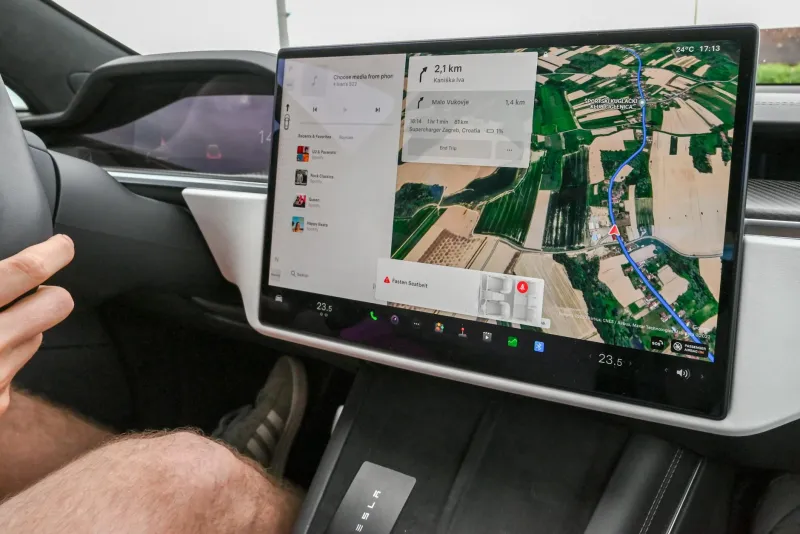
Contrast that with today's turn-by-turn instructions, which reduce the entire continental United States to a series of disconnected commands: "In 500 feet, turn right." We've become passengers in our own vehicles, following digital breadcrumbs without understanding where we're going or why.
The Economics of Getting Lost
Getting lost used to be expensive. A wrong turn could add hours to your trip, burning gas and daylight. This economic pressure created better navigators—Americans who could dead-reckon their way across unfamiliar territory using nothing but highway signs and common sense.
Families developed elaborate systems for road trip navigation. Dad typically drove while Mom served as navigator, armed with maps, a pen light, and an increasingly detailed set of handwritten directions. Kids in the backseat learned geography by osmosis, watching landscapes change and connecting the abstract shapes on maps to the real world rolling past their windows.
This collaborative navigation created shared responsibility. Everyone in the car had a role in getting to the destination. Today's GPS has made navigation a solitary, automated process. The driver follows instructions while passengers zone out on their phones, disconnected from the journey itself.
What We Lost When We Stopped Getting Lost
The most profound change isn't technological—it's psychological. Pre-GPS Americans developed what researchers call "spatial confidence," the belief that they could figure out where they were and how to get where they needed to go. This confidence extended beyond driving. People were more willing to explore new neighborhoods, take unfamiliar routes, and trust their ability to find their way back.
GPS anxiety is real and increasingly common. Americans who've grown up with turn-by-turn navigation often feel genuinely panicked when their phone dies in an unfamiliar area. They've never developed the mental mapping skills that previous generations took for granted.
We've also lost the serendipity of accidental discovery. Wrong turns used to lead to hidden gems: roadside diners, scenic overlooks, quirky small towns that weren't in any guidebook. Today's GPS calculates the most efficient route and keeps you on it, eliminating the happy accidents that once made road trips memorable.
The Death of Local Knowledge
Perhaps most significantly, we've severed the connection between local knowledge and navigation. Before GPS, travelers depended on locals for information about road conditions, shortcuts, and hidden hazards. This created countless small interactions—conversations with gas station attendants, directions from small-town sheriffs, recommendations from diner waitresses.
These exchanges were more than just practical—they were cultural. They connected travelers to the communities they passed through, creating a network of informal hospitality that made America feel smaller and more connected.
Today, GPS eliminates the need for local knowledge. We can drive from coast to coast without asking a single person for directions, missing opportunities for human connection and local insight that once defined American travel.
The Efficiency Trap
Modern navigation is undeniably more efficient. GPS can calculate optimal routes in real-time, accounting for traffic, construction, and weather. It's saved countless hours and reduced the stress of travel planning.
But efficiency isn't everything. The old system of paper maps and local knowledge created a different kind of journey—one that was slower but richer, less predictable but more engaging. It required Americans to be active participants in their own travel, not passive consumers of automated directions.
Finding Our Way Back
The skills we've lost—spatial reasoning, map reading, directional confidence—aren't just nostalgic curiosities. They're cognitive abilities that shaped how Americans related to their physical environment. When we stopped navigating, we didn't just change how we travel. We changed how we think about space, place, and our ability to find our own way in the world.
Some Americans are rediscovering these lost arts, deliberately traveling without GPS and returning to paper maps. They're not rejecting technology—they're reclaiming a more engaged relationship with the landscape and their own navigational abilities.
The road trip will survive, but the road trip as a test of skill, patience, and problem-solving may be gone forever. Whether that's progress or loss depends on what you value more: getting there quickly, or remembering how it felt to truly know where you were going.