When Streets Had Stories Instead of Screens: The Lost Generation of Urban Explorers
When Streets Had Stories Instead of Screens: The Lost Generation of Urban Explorers
There was a time when knowing your way around a city meant something. Not just having the ability to get from Point A to Point B, but truly understanding the rhythm of a place—which corner always smelled like fresh bread, where the afternoon shadows fell just right, which shortcut would save you ten minutes on a rainy Tuesday.
That era ended somewhere between MapQuest printouts and the iPhone's blue dot. Today, we navigate cities like passengers in our own lives, following digital breadcrumbs that tell us exactly where to step next. But what did we lose when we stopped getting lost?
The Apprenticeship of Wrong Turns
In 1985, moving to a new city meant serving an apprenticeship in confusion. New residents would spend their first months taking wrong turns, backtracking through unfamiliar neighborhoods, and slowly building a mental map through repetition and mistakes. Each wrong turn became part of a personal geography lesson that no app could replicate.
Sarah Chen, who moved to Chicago in 1987, remembers her first winter there: "I got lost trying to find the post office and ended up walking for two hours in the snow. But I discovered this amazing little bookstore, a coffee shop that became my regular spot, and learned that Halsted Street was my north star—if I could find Halsted, I could find home."
That kind of accidental discovery was built into the old system of navigation. Getting lost wasn't a failure—it was how cities revealed themselves to newcomers. Every detour became a story, every landmark earned its place in your personal map through experience rather than algorithm.
The Human GPS Network
Before Siri, there was something even more sophisticated: the informal network of local knowledge that existed on every street corner. Gas station attendants who could draw you a map on the back of a receipt. Shop owners who knew not just where you wanted to go, but the best time to go there. Strangers who would stop their own journeys to point you in the right direction.
"Excuse me, do you know how to get to..." was the beginning of thousands of daily micro-conversations that connected residents to visitors, locals to newcomers, and neighborhoods to the wider city. These interactions did more than provide directions—they created tiny moments of community that made cities feel more human-scaled.
Jim Rodriguez, a longtime resident of San Francisco, used to give directions to lost tourists multiple times a week. "You'd see the same confused look on their faces that you remembered having when you first arrived. So you'd walk them to the corner, point out the landmarks, maybe mention that the good dim sum place was just two blocks over. It made you feel useful, connected to your neighborhood."
The Mental Architecture We Built
Without GPS, Americans developed remarkably sophisticated mental maps of their cities. These weren't just collections of street names and addresses, but rich, layered understandings of urban space that included timing, shortcuts, seasonal changes, and the subtle rhythms that made each neighborhood distinct.
Urban planners in the 1970s and 80s marveled at how well residents could navigate their cities using landmarks, cardinal directions, and an intuitive understanding of urban geometry. People knew that downtown was "that way" not because their phone told them, but because they had internalized the city's basic structure through months or years of walking, driving, and paying attention.
This kind of spatial knowledge created a different relationship with cities. Residents weren't just passing through—they were embedded in the urban fabric, aware of its patterns and peculiarities in ways that made them true locals rather than tourists in their own neighborhoods.
The Convenience Trade-Off
Today's navigation technology is undeniably superior in terms of efficiency. Google Maps can route you around traffic jams in real-time, find the nearest gas station at 2 AM, and guide you to destinations you've never heard of with pinpoint accuracy. The time we once spent getting lost is now available for other activities.
But efficiency came with hidden costs. Modern navigation encourages a tunnel-vision approach to cities—we follow the blue line from origin to destination without really seeing what's in between. The serendipitous discoveries that came from taking wrong turns have been optimized away.
Worse, our outsourced navigation skills have atrophied. Studies show that heavy GPS users struggle more with spatial reasoning and have difficulty forming mental maps of familiar areas. We've become passengers in our own cities, dependent on devices that know the way but can't tell us why it matters.
What We Lost in Translation
The shift from exploration to navigation represents more than just a technological upgrade—it's a fundamental change in how we relate to the places we live. The old system of getting lost and finding your way back created residents who truly knew their cities. The new system creates users who can efficiently move through urban space without ever really inhabiting it.
There's something irreplaceable about the confidence that comes from knowing you can find your way home from anywhere, using nothing but your own accumulated knowledge and sense of direction. That confidence created a different kind of urban citizenship—one based on genuine familiarity rather than digital dependency.
Finding Our Way Forward
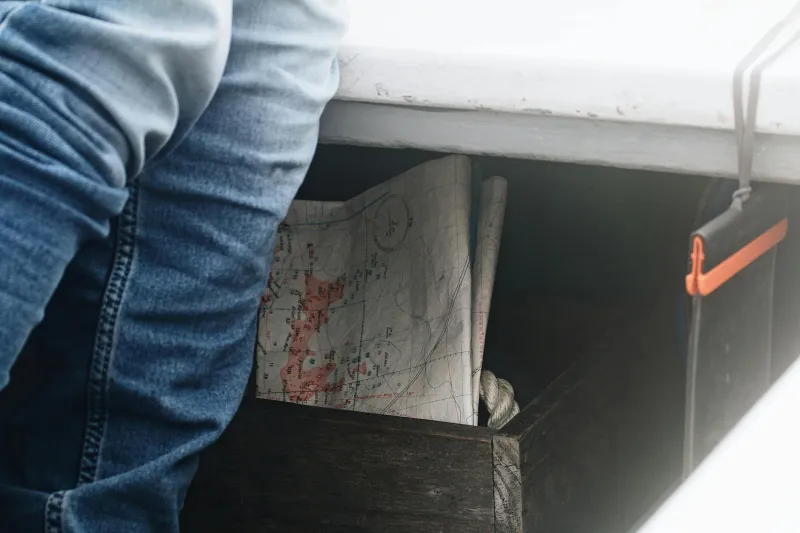
None of this means we should abandon GPS and return to the days of folded paper maps. But recognizing what we've traded away might inspire us to occasionally turn off the navigation, take a different route, or allow ourselves the luxury of wandering without a predetermined destination.
Because the best stories about cities don't come from the most efficient routes—they come from the times we got lost and discovered something unexpected along the way back home.