When Words Were Worth the Wait: How Americans Once Treasured Letters That Traveled at the Speed of Life
The Ritual of Reaching Out
Picture this: You have something important to tell someone you care about. You sit down at a wooden desk, pull out a sheet of crisp paper, and begin to write. You know your words won't reach them for at least a week, maybe two. You know their response won't come back for another two weeks after that. So you make every sentence count.
This was the reality of personal communication for generations of Americans, right up until the 1990s when email began its takeover of our daily lives. Before instant messages and video calls, before texts that disappear into digital noise, there was the handwritten letter — a deliberate act of connection that demanded patience, thoughtfulness, and genuine intention.
The Weight of Words on Paper
When Americans sat down to write a letter in 1950, or even 1985, they weren't firing off quick thoughts between meetings. Letter writing was an event. People would often draft their thoughts first, choosing words carefully because once that envelope was sealed and stamped, there was no taking it back, no quick follow-up to clarify a misunderstanding.
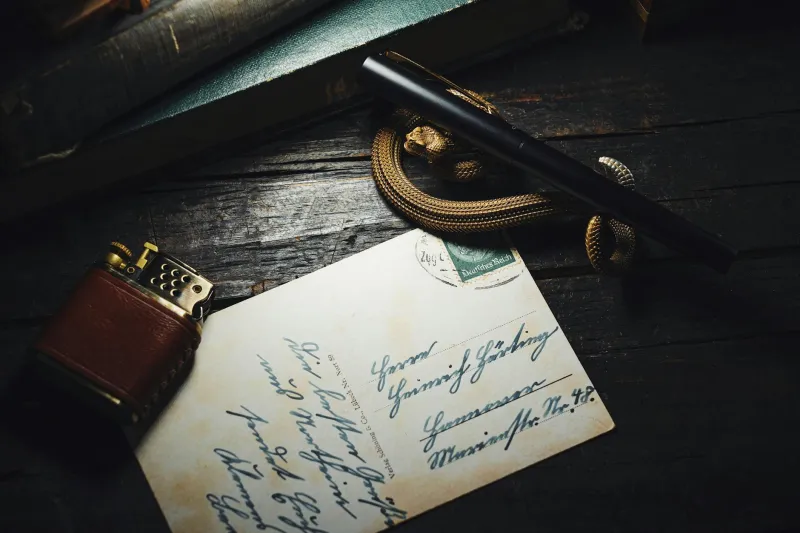
The physical act itself carried meaning. The choice of stationery, the care taken with handwriting, even the selection of a pen — these details communicated as much as the words themselves. A love letter written on fine paper with a fountain pen sent a different message than a quick note scrawled on lined notebook paper.
Compare this to today, where the average American sends and receives over 70 text messages per day. We dash off responses while walking, eating, or half-watching TV. Our thumbs do the talking, and autocorrect often changes our meaning before we even notice.
The Anticipation Economy
Perhaps the most profound difference was how waiting shaped the entire emotional landscape of relationships. When your college boyfriend was studying abroad in Europe, you might wait three weeks for a letter to cross the Atlantic. When your grandmother moved to Florida, holiday updates arrived like seasonal gifts — substantial, anticipated, savored.
This waiting period created what we might call an "anticipation economy." People planned their emotional investments differently. They saved up stories, observations, and feelings to share in one substantial communication rather than dispersing them across dozens of daily micro-interactions.
The mailbox became a daily source of hope and disappointment. Americans would time their walks to coincide with mail delivery, rushing to see if that expected letter had finally arrived. Children away at summer camp would count the days since their last letter from home, while parents would reread those camp letters multiple times, parsing every detail about their child's experience.
When Distance Really Meant Something
In our hyper-connected age, it's hard to imagine how physical distance once created genuine communication barriers. A family member stationed overseas with the military might as well have been on another planet. Their letters were lifelines, but they were lifelines that operated on geological time compared to today's instant connectivity.
Long-distance relationships required a level of commitment and imagination that seems almost quaint today. Couples would synchronize their letter-writing schedules, sometimes writing daily even knowing their words wouldn't arrive for weeks. They'd reference shared memories in elaborate detail, paint pictures with words of their daily lives, and plan future reunions with the careful precision of military campaigns.
Today, we video chat with friends in Tokyo as easily as we call someone across town. The collapse of distance has made the world smaller, but it's also made our communications more casual, more disposable, more easily taken for granted.
The Art of Permanent Thoughts
Handwritten letters created an accidental archive of American life. Families kept shoeboxes full of correspondence, creating unintentional historical records. These letters captured not just major life events, but the texture of daily existence — what people worried about, what made them laugh, how they saw their changing world.
Contrast this with today's digital communications, which feel simultaneously permanent and ephemeral. While our texts and emails technically live forever in various servers and cloud storage systems, they're also buried in an avalanche of digital noise. Who among us has ever sat down to reread a year's worth of text messages the way our grandparents might have treasured a bundle of old letters?
The Lost Patience of Deep Connection
The most striking difference isn't technological — it's psychological. Letter writing required a type of patience that modern life has largely abandoned. You couldn't clarify a misunderstanding with a quick follow-up message. You couldn't send a photo to show what you meant. You had to trust that your words, carefully chosen and clearly expressed, would carry your full meaning across time and space.
This limitation forced a kind of communication discipline that's nearly extinct today. People became better at expressing complex thoughts in writing, better at anticipating how their words might be interpreted, better at the fundamental skill of making themselves understood through language alone.
What We Gained and What We Lost
Today's instant communication has brought undeniable benefits. Families stay closer across distances, emergencies can be handled in real-time, and the friction that once made long-distance relationships nearly impossible has largely disappeared.
But something was also lost in the transition from letters to texts. The weight that scarcity gave to words. The sweetness that anticipation added to connection. The way that physical distance once made emotional closeness feel like a genuine achievement rather than a default expectation.
In our rush to eliminate the waiting, we may have also eliminated some of the meaning that waiting created. The question isn't whether we should return to handwritten letters — we can't and probably wouldn't want to. But perhaps we can learn from that slower era about investing more intention into our words, even when those words travel at the speed of light.