Gone Until Dark: The Vanishing Summer When American Children Ruled Their Own Days
The Great Morning Exodus
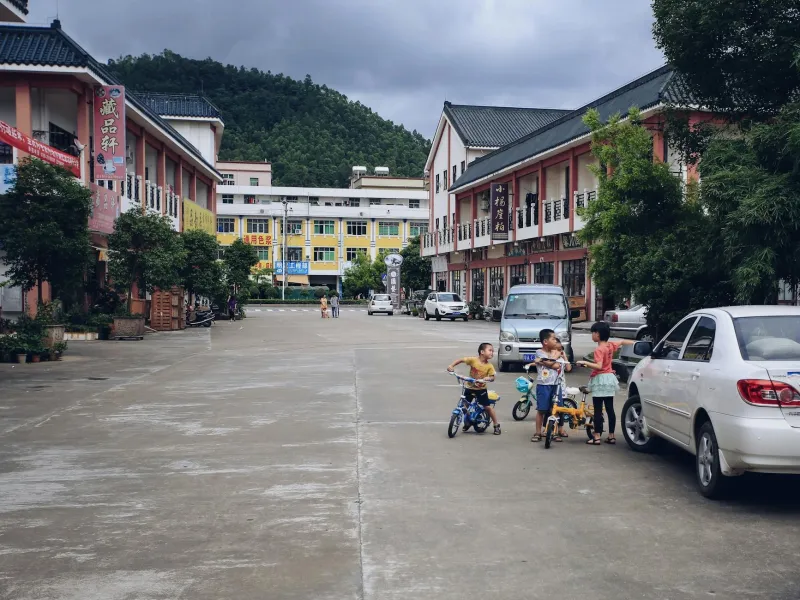
It's 8:30 AM on a Tuesday in July, 1978. Across suburban America, the same scene plays out on thousands of streets: screen doors slam, bicycles rattle down driveways, and children scatter into the neighborhood like dandelion seeds on the wind. They won't be seen again until the streetlights flicker on.
No parent asks where they're going. No one checks in via text message. There are no scheduled activities, no camp counselors, no supervised playdates. Just summer, stretched out like an endless highway, waiting to be explored.
This was childhood for millions of Americans: three months of unstructured, unsupervised freedom that seems almost unimaginable today.
The Territory of Childhood
In that vanished America, children possessed their own geography. They knew every shortcut, every hiding spot, every yard where the dog was friendly and every house where the old man would chase you away from his prized tomatoes. The neighborhood was their kingdom, and they ruled it with the confidence of native explorers.
Summer days began with possibility and ended with exhaustion. Kids might spend the morning building elaborate forts in vacant lots, using whatever materials they could scavenge: old boards, discarded furniture, sheets stolen from home. The afternoon might bring epic games of hide-and-seek that spanned multiple backyards, or bicycle expeditions to the creek that required careful navigation of busy streets and parental radar.
Conflicts arose and were resolved without adult intervention. Disputes over game rules were settled through negotiation, argument, and occasionally, brief scuffles that ended in handshakes and resumed play. Children learned to read social dynamics, to compromise, to lead and follow, all without a guidance counselor or conflict resolution specialist in sight.
The Rhythm of Unscheduled Time
Without the tyranny of schedules, summer days developed their own organic rhythm. Mornings were for ambitious projects—the construction of elaborate tree houses, the planning of neighborhood Olympics, the creation of secret clubs with mysterious initiation rites. Afternoons brought lazier pursuits: reading comic books in the shade, catching fireflies in mason jars, lying on warm concrete and watching clouds drift across endless blue skies.
Boredom wasn't a problem to be solved by parents—it was a creative catalyst. "I'm bored" was the prelude to invention, the spark that ignited imagination. Children who exhausted the obvious entertainment options were forced to create their own, leading to elaborate games, storytelling sessions, and adventures that existed purely in the realm of childhood.
The absence of constant stimulation created space for reflection, for daydreaming, for the kind of mental wandering that psychologists now recognize as crucial for creativity and emotional development.
When Danger Was Part of Growing Up
This freedom came with risks that would horrify modern parents. Children climbed trees to dangerous heights, explored abandoned buildings, rode bicycles without helmets through neighborhoods where cars moved at residential speeds but drivers paid less attention to crosswalks.
They learned to assess danger themselves, to calculate risks, to understand consequences through experience rather than instruction. A scraped knee from a bicycle mishap taught lessons about speed and control that no safety lecture could convey. Getting lost taught navigation skills and self-reliance that GPS could never provide.
Parents operated on the assumption that children were generally safe in their own neighborhoods, that the community itself provided a safety net. Neighbors looked out for each other's kids, not through formal arrangements, but through the natural vigilance of people who knew each other and cared about their shared spaces.
The Architecture of Modern Summer
Today's summer childhood looks fundamentally different. The average American child's summer is a carefully orchestrated symphony of activities: soccer camps, swimming lessons, art classes, academic enrichment programs. Days are divided into scheduled blocks, with transportation arranged and supervision provided.
Parents approach summer vacation like military campaign planners, coordinating schedules, arranging carpools, and ensuring that every hour is productively filled. The idea of a child with "nothing to do" has become a parental failure rather than a creative opportunity.
This shift reflects broader changes in American society. Increased awareness of real and perceived dangers has made unsupervised outdoor play seem reckless. Both parents working full-time jobs has created a need for structured childcare during summer months. The decline of neighborhood cohesion has eliminated the informal community oversight that once made free-range childhood possible.
The Digital Displacement
Perhaps most significantly, the rise of digital entertainment has fundamentally altered the appeal of outdoor exploration. Why build a fort in the woods when you can build entire worlds in Minecraft? Why organize a neighborhood baseball game when you can play MLB on PlayStation with friends from around the globe?
Screen-based entertainment offers immediate gratification, sophisticated graphics, and endless variety—advantages that the slower pleasures of outdoor play struggle to match. The patience required to organize neighborhood games, to negotiate rules, to deal with weather and scraped knees, seems almost quaint compared to the instant access of digital entertainment.
The Unintended Consequences
What was lost in this transformation extends beyond mere nostalgia. Research suggests that unstructured outdoor play develops executive function, risk assessment skills, and emotional resilience in ways that structured activities cannot replicate. The ability to navigate complex social situations without adult intervention, to solve problems creatively, to tolerate boredom and transform it into imagination—these skills were byproducts of the old summer freedom.
Modern children are arguably safer, more supervised, and more enriched with educational opportunities. But they're also more scheduled, more dependent on adult guidance, and less experienced in the art of creating their own entertainment.
The Pendulum's Pause
Some communities are attempting to recapture elements of the old summer freedom through organized "free play" initiatives—a paradox that would have amused children of the 1970s. The idea that unstructured play requires structure to exist reveals how far the pendulum has swung.
Yet perhaps this represents not a return to the past, but an evolution toward something new—a conscious attempt to preserve the benefits of childhood independence while acknowledging the realities of modern life.
The Echo of Screen Doors
That sound—the sharp crack of a screen door slamming as children burst into summer morning—has largely vanished from American neighborhoods. In its place, we hear the electronic chimes of devices, the hum of air conditioners, the scheduled arrival of camp buses.
Both soundtracks have their place in the story of American childhood. But for those who remember the weight of summer freedom, the sound of that slamming door carries echoes of a different kind of growing up—one measured not in activities completed or skills acquired, but in adventures survived and friendships forged in the crucible of complete, unsupervised freedom.