Ink, Instinct, and a Bottle of Pills: The High-Wire Act of the Old American Pharmacy
There's a joke that's been circulating in medical circles for decades: a doctor's handwriting is so bad that even other doctors can't read it. For most of the twentieth century, that joke wasn't just a punchline — it was a daily operational reality inside every corner drugstore in America.
A folded slip of paper would arrive at the pharmacy counter. On it, a physician had scrawled something in a shorthand that blended Latin abbreviations, chemical names, dosage figures, and personal notation style into a script that looked less like language and more like seismic data. And standing on the other side of that counter was your pharmacist, who was expected to decode it correctly, every single time, with someone's health hanging in the balance.
The Art of Reading the Unreadable
Old-school American pharmacists didn't just fill prescriptions — they interpreted them. The job required a working knowledge of every physician in the area, because each doctor had their own particular scrawl. A pharmacist who had been at the same counter for fifteen years knew that Dr. Henderson always looped his sevens like nines, and that Dr. Kowalski's abbreviation for a particular antibiotic looked dangerously close to his shorthand for a blood pressure medication.
This wasn't guesswork. It was pattern recognition built over years of relationship and repetition. The neighborhood pharmacist operated as a kind of human Rosetta Stone, cross-referencing what was written against what they knew about the patient, the prescribing doctor, and the medical logic of the situation. If something didn't add up — if a dosage looked too high, or a combination of drugs rang an alarm bell in the back of their mind — they picked up the phone and called the doctor directly.
That phone call was the safety net. Not software. Not an automated alert. A person who knew both parties and trusted their own judgment enough to push back.
Memory as Medicine
Before computerized records and integrated pharmacy networks, the local pharmacist often carried the most complete picture of a patient's medication history in their own head. If you'd been picking up your prescriptions at the same drugstore since 1962, the pharmacist behind the counter knew every pill you'd ever taken. They remembered your allergies. They remembered the reaction you'd had to sulfa drugs in 1971. They remembered that your mother had been on warfarin and that the whole family needed to be watched carefully around blood thinners.
This informal institutional knowledge was never written down in any systematic way. It lived in the pharmacist's memory and in dog-eared paper records kept in file boxes behind the counter. It was fragile, deeply human, and surprisingly effective.
Drug interaction awareness in that era was also largely a matter of professional training and personal experience. There were reference books — thick, dense volumes like the PDR, the Physicians' Desk Reference — but looking something up mid-transaction took time. In practice, experienced pharmacists carried a mental library of the most dangerous combinations and flagged them on instinct before they ever reached for a book.
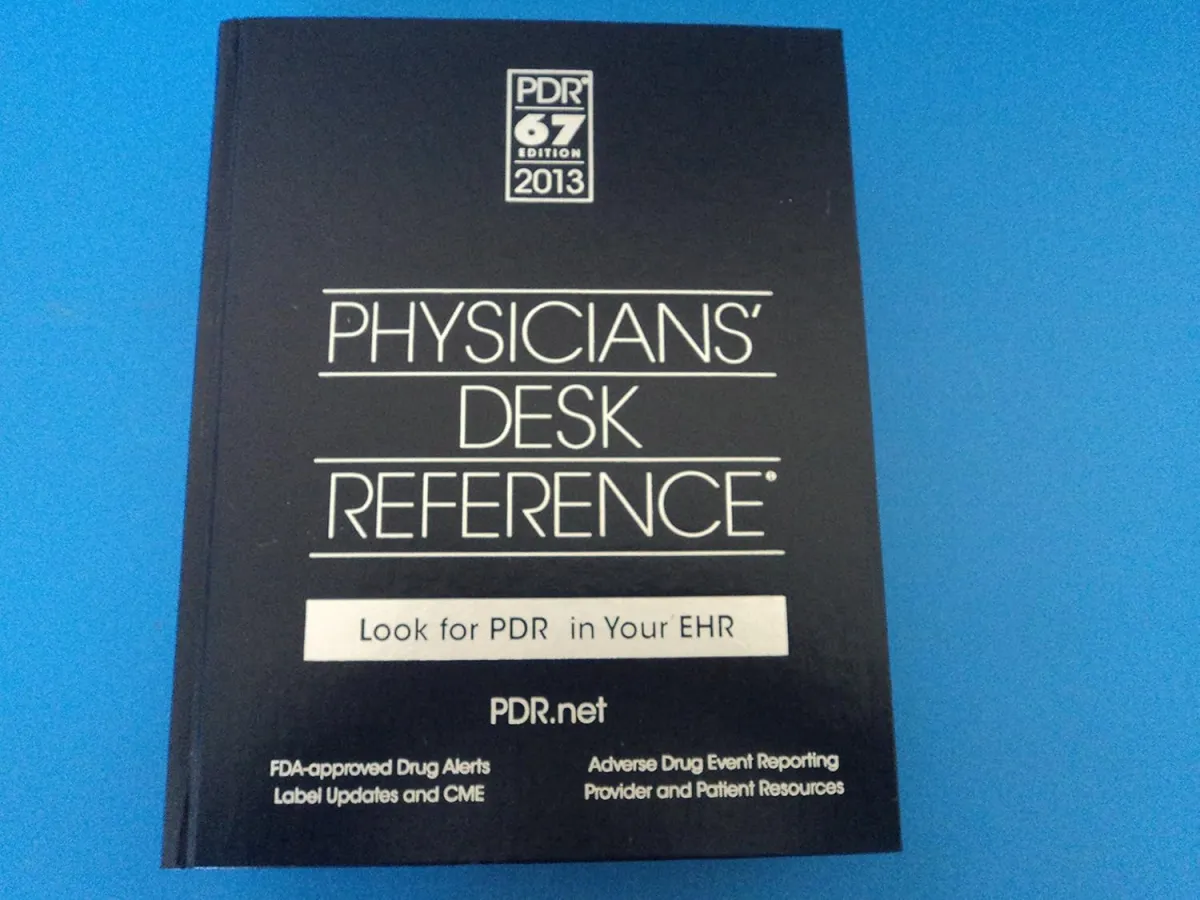 Photo: Physicians' Desk Reference, via m.media-amazon.com
When the System Cracked
Of course, it didn't always work. Misread prescriptions caused real harm. A six that looked like an eight, a milligram confused with a microgram — these weren't hypothetical errors. Studies conducted in the late 1990s and early 2000s estimated that medication errors were contributing to tens of thousands of preventable deaths in the United States every year, and illegible handwritten prescriptions were a documented factor in a significant share of those cases.
The Institute of Medicine's landmark 2000 report, To Err Is Human, threw a spotlight on the problem that the medical establishment could no longer politely ignore. The handwritten prescription, for all its nostalgic charm, was also a liability.
 Photo: Institute of Medicine, via www.collegenp.com
The Algorithm Takes the Counter
Electronic prescribing — e-prescribing — began its serious rollout in the early 2000s and has since become the dominant system across most of the country. Today, a physician taps a screen, selects a medication from a standardized database, and the prescription travels digitally to the pharmacy of your choice before you've even left the exam room. The software flags drug interactions automatically. It checks your allergy history. It cross-references dosage against your weight, your age, your existing medications.
The results have been measurable. Error rates associated with illegible handwriting have dropped dramatically. Pharmacists spend less time on the phone chasing down confused prescriptions and more time on patient counseling. The system is objectively safer in a number of quantifiable ways.
What Went Quiet at the Counter
But something else happened when the prescription went digital. The relationship between patient and pharmacist — that ongoing, accumulated, deeply personal knowledge — began to thin out. When your prescription arrives as a clean digital record, the pharmacist's role shifts from interpreter and collaborator to processor and dispenser. The software already checked the interactions. The database already flagged the allergy. The human judgment that once stood at the center of the transaction gets quietly pushed to the margins.
The corner drugstore itself has largely vanished, replaced by pharmacy counters inside big-box stores and supermarkets where the staff turns over regularly and nobody has been behind that counter for fifteen years. The pharmacist who knew your mother's warfarin history doesn't exist anymore — that data lives in a system, and the system doesn't know you.
There's a real trade-off buried in that shift. The old system was riskier in ways that were visible and measurable. But it was also richer in ways that are harder to quantify — the accumulated human intelligence of someone who had watched your family's health for decades and was paying close attention.
The ink is gone. The prescriptions are cleaner and the errors are fewer. But somewhere between the scrawl and the algorithm, a certain kind of care got left behind.