Reading the Clouds Like Scripture: How America Once Deciphered Tomorrow's Weather From Nature's Clues
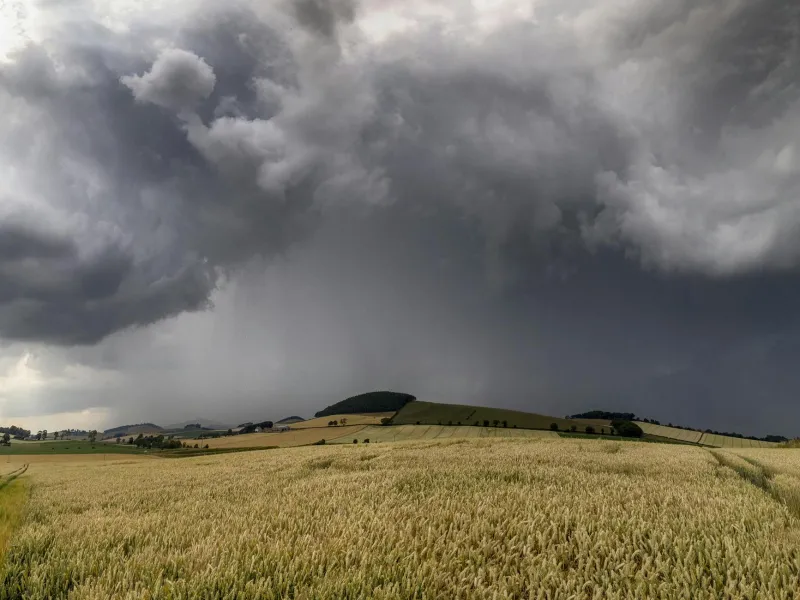
Your grandmother's creaking knees weren't just a sign of aging—they were America's original weather forecast. For generations before the Weather Channel existed, millions of Americans relied on a complex network of natural signals, folk wisdom, and bodily sensations to predict what tomorrow might bring.
The Art of Sky Reading
In 1950s rural Kansas, farmers could tell you whether rain was coming by watching how their cattle clustered together or noting the way smoke rose from their chimneys. This wasn't superstition—it was a sophisticated understanding of atmospheric pressure, humidity, and wind patterns passed down through generations.
Old-timers memorized rhymes like "Red sky at night, sailor's delight; red sky at morning, sailors take warning," which actually contains legitimate meteorological principles about high and low pressure systems. They watched for mare's tail clouds (cirrus formations) that signaled weather changes 24 to 48 hours ahead, and they knew that when swallows flew low, rain was likely approaching because insects—their food source—were being pushed down by falling air pressure.
The Human Barometer Network
People with arthritis, old injuries, or rheumatism became unofficial weather stations. Their aches and pains intensified before storms as dropping barometric pressure affected their joints and scar tissue. Entire communities relied on these "human barometers" to plan harvests, outdoor events, and travel.
Mrs. Henderson's hip told the congregation whether to plan the church picnic indoors. Uncle Joe's war wound predicted thunderstorms better than any almanac. This biological forecasting system created a network of weather sensitivity that spanned neighborhoods and connected people through shared atmospheric awareness.
The Almanac Gospel
The Old Farmer's Almanac, first published in 1792, was treated like scripture in American homes. Families planned weddings, planted crops, and scheduled barn raisings based on its long-range predictions. Unlike today's seven-day forecasts that change hourly, almanac predictions were made months or even a year in advance, requiring communities to commit to weather faith.
 Photo: Old Farmer's Almanac, via www.qualitylogoproducts.com
These publications combined astronomical calculations, historical weather patterns, and folk wisdom into predictions that were surprisingly reliable for broad seasonal trends, even if they couldn't pinpoint exactly when Tuesday's thunderstorm would hit.
The Digital Weather Revolution
Today's weather prediction is a marvel of technology that would seem like magic to those earlier generations. Satellites circle Earth every 90 minutes, beaming down images of storm systems forming over oceans. Doppler radar can track individual raindrops. Supercomputers process millions of atmospheric data points every second.
Your smartphone delivers minute-by-minute precipitation forecasts, severe weather alerts, and temperature predictions accurate to the degree. We know exactly when rain will start and stop, how many inches to expect, and whether tomorrow's humidity will make it feel like 87 degrees instead of 84.
What We Lost in Translation
But something was lost in this technological leap. The intimate connection between people and their natural environment has largely disappeared. Most Americans couldn't identify a cumulonimbus cloud if their lives depended on it, and few notice the subtle atmospheric changes that once guided daily decisions.
Our ancestors lived in constant dialogue with their environment. They noticed wind shifts, pressure changes, and seasonal patterns because survival depended on it. Weather wasn't something that happened to them—it was something they participated in, reading its signs like a language they'd spoken all their lives.
The Accuracy Question
Modern meteorology is undeniably more accurate for specific, short-term predictions. Today's five-day forecast is as accurate as a three-day forecast was in the 1980s. But those old folk methods weren't wrong—they were different. They predicted patterns and trends rather than precise timing, and they were remarkably reliable for the long-term planning that agricultural communities needed.
A farmer's father might not have known exactly when the spring rains would come, but his understanding of seasonal patterns, soil conditions, and plant behavior helped him time planting better than many modern farmers who rely solely on digital forecasts.
The Price of Precision
We've traded environmental intuition for algorithmic certainty. Instead of developing our own weather sense, we've outsourced atmospheric awareness to machines. The result is unprecedented accuracy but also a kind of meteorological helplessness—panic when the weather app stops working, confusion when forecasts change, and complete disconnection from the natural systems that still govern our daily lives.
Those aching joints and shifting clouds are still sending the same signals they always have. We've just stopped listening to a language our grandparents spoke fluently, choosing instead to wait for push notifications to tell us what the sky has been trying to say all along.