Stuck on the Couch With Nothing But Time: The Sick Day America Used to Know
Ask someone who grew up in the 1960s or 1970s to describe being home sick from school, and watch their face do something unexpected. There's usually a pause, and then something that looks almost like wistfulness — a softened expression you wouldn't normally associate with a fever and a sore throat.
"It was actually kind of nice," they'll often say, slightly surprised by their own admission.
That reaction is worth examining, because it points to something that's been quietly erased from American life: the experience of genuine, enforced stillness.
The Anatomy of a Mid-Century Sick Day
The ritual was consistent enough across the country that it almost qualifies as a cultural institution. You woke up not feeling right, made the case to a parent, and if the case was convincing enough — a real fever, a visible sore throat, something that couldn't be easily dismissed — you were granted the day. Your parent called the school. You were officially off the grid.
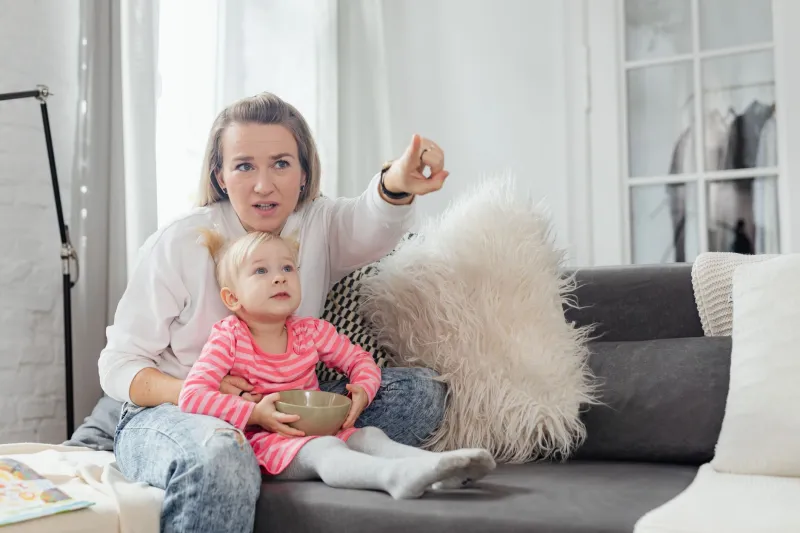
Then came the couch migration. A blanket appeared. A pillow was relocated from the bedroom. The television, which occupied a specific corner of the living room and received somewhere between three and seven channels depending on your antenna and your zip code, was turned on and tuned to whatever was broadcasting at that hour. Which, during school hours on a weekday, was not much.
Daytime television in mid-century America was a specific and peculiar landscape. Game shows. Soap operas. Local news cut-ins. The occasional talk program with a studio audience that seemed to exist in a different dimension from the rest of human experience. If you were lucky, a classic film might materialize on one of the UHF channels, slightly snowy and interrupted by ads for local car dealerships and personal injury attorneys.
There was soup. Almost always soup — Campbell's, usually, heated on the stove and delivered in a bowl with crackers on the side. There was orange juice. There was the thermometer, checked with a frequency that suggested your temperature might change dramatically between 10 a.m. and 10:15.
And then there was the time. Hours of it, unhurried and unscheduled, with no particular place to go and no particular way to fill it.
The Silence Was the Point
What made a sick day genuinely different from every other day was its isolation. You were cut off — not metaphorically, but actually. Your friends were at school, unreachable until three o'clock. The phone was in the kitchen, attached to the wall, and calling someone during school hours wasn't done. There were no text messages to send, no social feeds to check, no way to broadcast your condition to an audience or receive their sympathy in real time.
You were alone with your thoughts in a way that almost never happened otherwise.
For a child, this was a strange and occasionally profound experience. Without external stimulation competing for attention, the mind did things it didn't normally do. It wandered. It invented. It revisited things — conversations, worries, ideas — that the usual noise of daily life kept buried. Kids who were sick for several days sometimes emerged from the experience having thought through something important, or having developed a new interest sparked by an unexpected television program, or simply having become more comfortable in their own company.
Boredom, it turned out, was not an emergency. It was a condition that resolved itself, usually through imagination.
The Modern Sick Day Looks Different
A child home sick today operates in an environment that would have seemed hallucinatory to their grandparents. The streaming catalog available on a single tablet contains more entertainment than a mid-century American could have consumed in several lifetimes. Group chats keep them socially connected to their entire friend network in real time. School assignments can be submitted digitally, teachers can be emailed, and the general shape of the day — the social dimension of it, the informational texture of it — remains largely intact even from a couch.
For adults, the modern sick day is almost indistinguishable from a normal remote workday. Emails still arrive. Meetings can be joined from bed. The expectation of availability doesn't fully lift just because someone has a fever. The boundaries between sick and working, between rest and productivity, have become genuinely porous in ways that would have baffled an earlier generation.
This has real health implications that researchers have started to document. Rest — actual, unstimulated rest — is physiologically different from lying in bed while monitoring a phone. The nervous system responds differently. Recovery timelines differ. The brain doesn't repair itself the same way when it's still processing a continuous stream of inputs.
What Enforced Stillness Taught a Generation
The adults who grew up with old-fashioned sick days often describe having learned something from them that they struggle to articulate precisely. It has to do with patience — not the performed patience of waiting for something to happen, but a deeper comfort with time passing without event. It has to do with solitude, and the discovery that being alone with yourself isn't necessarily a punishment.
It also has to do with recovery as a distinct state. Being sick used to mean being temporarily removed from the world — not partially removed, not mostly removed, but genuinely set apart. That separation had a psychological completeness to it. You were sick. You rested. You got better. You returned.
The modern sick day blurs all of that. The world follows you onto the couch. Recovery happens alongside everything else, in the margins of a day that never fully pauses.
There's something to be said for a culture that knew how to stop. That understood, without making a philosophy of it, that sometimes the right response to feeling terrible was to lie very still, watch a game show you didn't understand, eat soup you didn't choose, and let the hours move at whatever pace they wanted.
It wasn't exciting. It was, in its own quiet way, exactly what the body needed — and maybe what the mind needed too.