The Closed Door Was the Point: How Growing Up Stopped Being Private

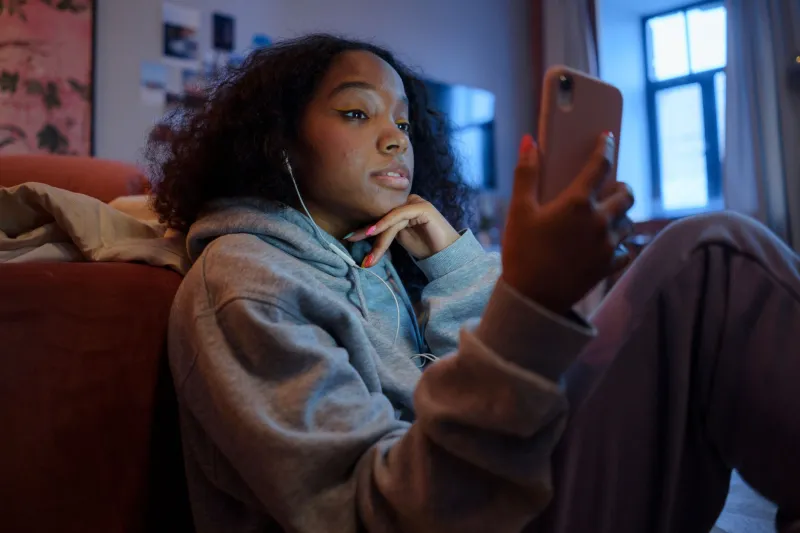
Photo by Photo by Misho Tektumanidze on Unsplash on Unsplash
Every generation of American parents has worried about what their teenagers were doing behind closed doors. The worry is ancient and entirely reasonable — adolescence has always involved a certain amount of behavior that adults would prefer not to witness in real time. The closed door was the agreement. You don't have to watch. They don't have to perform. Everyone gets through it.
That agreement has quietly collapsed.
What the Bedroom Used to Protect
Think about what a teenager's bedroom represented in, say, 1985. It was the one space in the house that was genuinely theirs — decorated with band posters and sports pennants, containing a phone with a cord that stretched just far enough to allow a whispered conversation in the hallway. Notes from friends lived in shoeboxes under the bed. Journals had locks. Photographs required film, development costs, and the physical possession of the print.
The mistakes teenagers made in that era were largely self-contained. A bad night at a party became a story that traveled by word of mouth, lost details with every retelling, and was forgotten within a few months. A fight with a friend was resolved — or not — between the two people involved. A romantic rejection stung privately, not in front of an audience of three hundred classmates watching a public thread deteriorate in real time.
This wasn't a golden age of perfect teenage behavior. Kids drank, fought, fell in love badly, made choices they'd regret, and said things they didn't mean. The difference was that the record of all that was fragile. Memory fades. Paper deteriorates. People move away and forget. The architecture of teenage life was built on impermanence, and impermanence was a form of mercy.
Parental oversight existed, but it had natural limits. Your mom might have talked to your friend's mom. Your dad might have grounded you for a month. But the enforcement mechanisms were human-scaled — they required actual effort, actual conversation, and a certain amount of trust in the process of kids figuring things out.
When the Walls Became Glass
The shift started gradually with the arrival of the internet in American homes through the 1990s, accelerated with social media platforms in the mid-2000s, and went essentially total with the smartphone becoming the standard teenage accessory somewhere around 2012. Each step made teenage life incrementally more visible — first to peers, then to strangers, and eventually to parents equipped with their own monitoring technologies.
Today's American teenager navigates a landscape that would be almost unrecognizable to their counterparts from thirty years ago. Their social life exists largely on platforms designed to be public, or semi-public, or at least legible to anyone with access to the right account. Snapchat offered the illusion of disappearing content, but screenshots don't disappear. Instagram built an entire grammar of self-presentation around the curated image. TikTok turned the performance of daily life into a competitive sport.
Meanwhile, parents gained tools their own parents never had. Location-sharing apps track exactly where a teenager is at any given moment. Screen time monitoring software logs every app opened and every website visited. Some families install keyloggers. Others read texts. The technology to surveil a teenager's entire digital life is available, affordable, and widely used — often with the teenager's knowledge, which creates its own particular kind of pressure.
Two Kinds of Visibility
It's worth separating two distinct things that changed simultaneously, because they create different problems.
The first is peer visibility — the way teenagers are now permanently on stage for one another. The social dynamics of high school have always been brutal in their way, but they used to be time-limited. You survived the hallway, went home, closed the door, and got a break. Now the hallway follows you home. The group chat never sleeps. The comment section is always open. Researchers studying adolescent mental health have documented the consequences: rising rates of anxiety, depression, and social comparison among teenagers, particularly girls, that track closely with smartphone adoption rates.
The second is adult visibility — parents, schools, and platforms watching, logging, and sometimes intervening in adolescent behavior that previous generations would have processed privately. This one is more complicated. There are genuine safety arguments for parental monitoring. The internet introduced threats — predators, radicalization pipelines, self-harm communities — that didn't exist in the closed-door era. Parents tracking their kid's location is not the same as parents reading their diary, even if it can feel that way.
But developmental psychologists have long argued that a certain amount of privacy is not just acceptable for teenagers — it's necessary. The process of forming an identity requires a space to try on versions of yourself without an audience. To be embarrassing. To change your mind. To make a mistake that doesn't become a data point in someone else's record of who you are.
The Performance of Growing Up
What's emerged is something genuinely new: a generation of teenagers who have never known what it feels like to have a private adolescence. They are the first Americans who will carry a documented record of their teenage selves into adulthood — not just the curated highlight reel they posted intentionally, but the screenshots others saved, the posts that got screenshotted before deletion, the comment made at fifteen that surfaces in a search at twenty-five.
The closed door wasn't just a boundary. It was a developmental technology. It gave teenagers the room to become people without having to perform the process in real time.
We didn't decide to take that away. We just handed them a phone, and the door stopped meaning anything. Whether we've thought carefully enough about what we traded is a question American families are only beginning to seriously ask.