Static, Stories, and Saturday Night: How a Single Speaker Once Held a Family Spellbound

Photo by Photo by Snapmaker 3D Printer on Unsplash on Unsplash
There's a piece of furniture that used to sit in the corner of nearly every American living room — large, wooden-cabineted, and treated with a reverence that today we'd find almost comical. It wasn't a television. It wasn't a bookshelf. It was the radio, and for roughly three decades spanning the 1930s through the early 1950s, it was the most powerful storytelling device in the country.
On any given evening, families across the United States would arrange themselves around it the way people now arrange themselves around nothing in particular, each drifting toward their own separate screen. Chairs pulled close. Lights sometimes dimmed. And from that single cloth-covered speaker would pour detectives, cowboys, comedians, horror, romance, and news — a full universe of experience conjured entirely from sound.
No picture. No visual cue. Just voice, music, and the extraordinary willingness of the human mind to fill in everything else.
The Schedule Was Sacred
What made the golden age of radio drama so distinctive wasn't just the content — it was the communal rhythm it imposed on daily life. Broadcasts ran on fixed schedules, and families built their evenings around them. Missing The Lone Ranger or Inner Sanctum Mysteries wasn't a minor inconvenience you could solve by pulling up a streaming app. It was simply gone. That scarcity created urgency, and urgency created ritual.
Families who might otherwise drift through an evening in separate corners of the house had a reason to be in the same room at the same time. The radio didn't just entertain — it synchronized. It gave households a shared calendar of anticipation: Tuesday was this show, Friday was that one, Sunday evening belonged to Jack Benny or Edgar Bergen and Charlie McCarthy without negotiation.
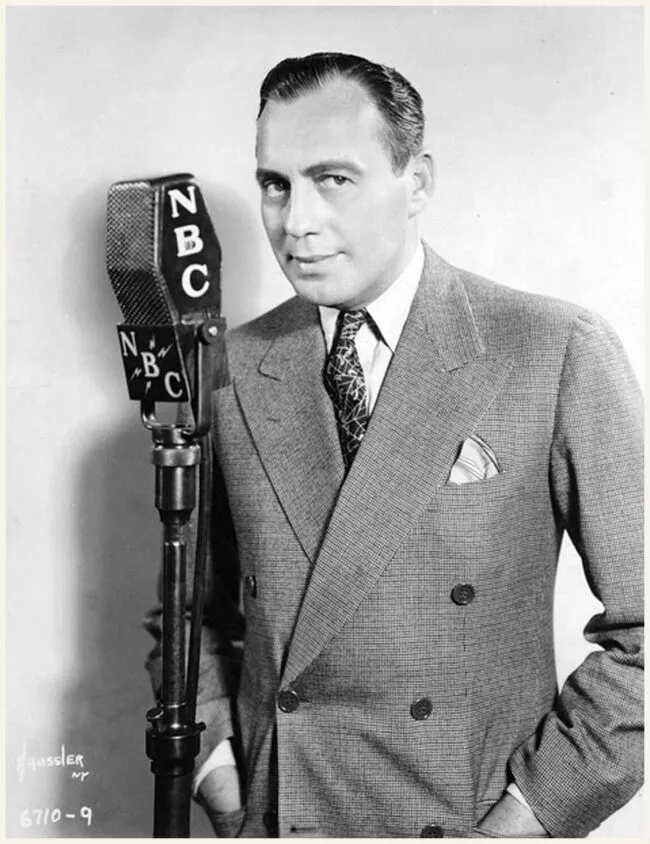 Photo: Jack Benny, via usaradiomuseum.com
At its peak in the 1940s, radio drama attracted audiences that dwarfed anything television would pull for decades. Orson Welles' 1938 broadcast of The War of the Worlds — a dramatized news-bulletin-style adaptation of H.G. Wells' alien invasion story — reportedly sent portions of the listening public into genuine panic. That's the power of a medium that required its audience to participate. The mind, given enough auditory suggestion, will construct a reality more vivid than any special effect.
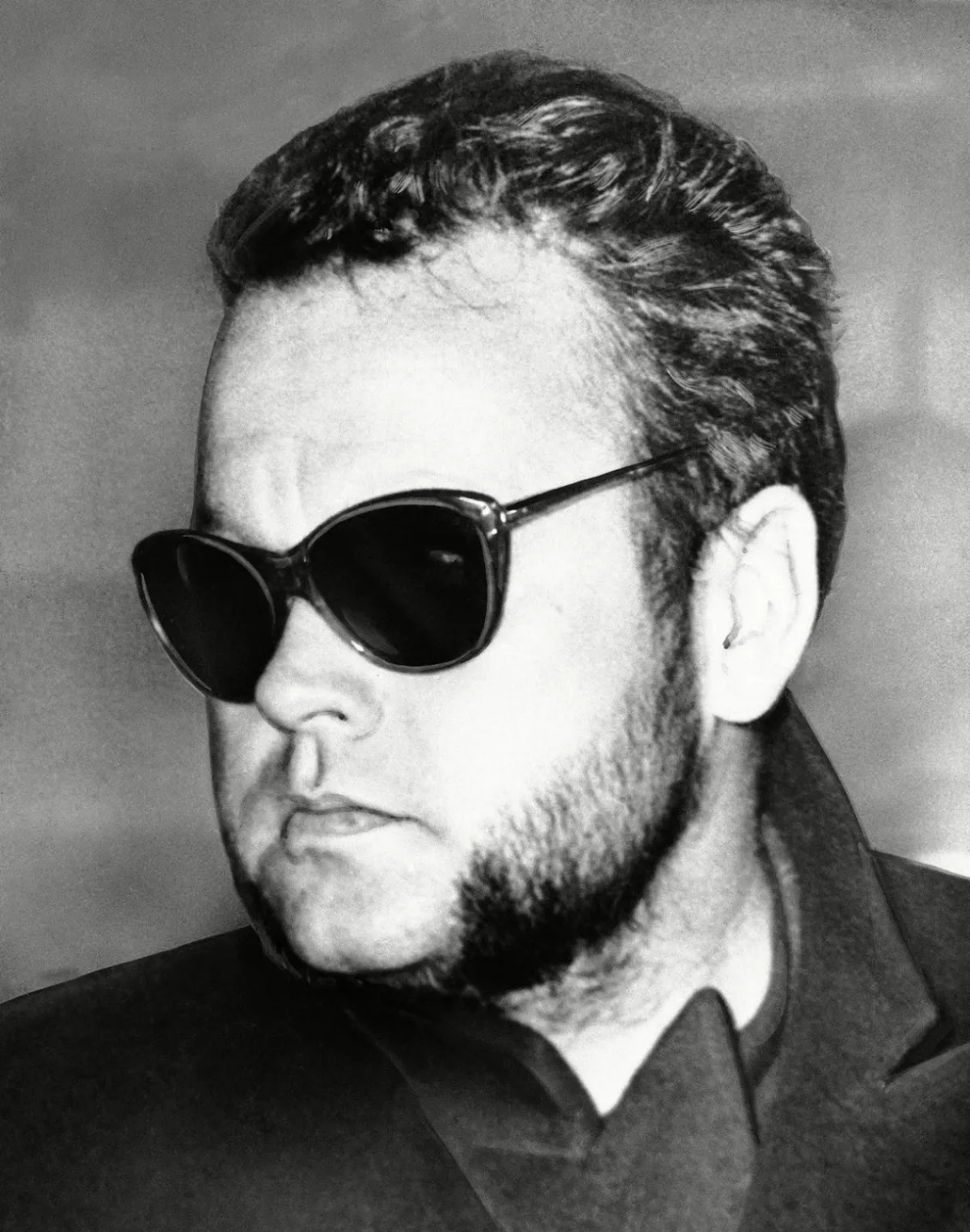 Photo: Orson Welles, via 1.bp.blogspot.com
The Imagination Did the Heavy Lifting
This is the part that's genuinely difficult to convey to anyone raised on high-definition visuals: radio drama asked something of its audience that modern entertainment almost never does. It required active imagination.
When a sound designer dropped the creak of a door, the rustle of leaves, and a low musical sting behind a narrator's voice, the listener's brain didn't receive a scene — it built one. Every listener's version of the haunted house or the dusty frontier saloon was slightly different, personally constructed, and therefore more deeply felt than any image imposed from outside.
Children who grew up with radio frequently describe it as the most vivid entertainment experience of their lives — more immediate than film, more immersive than television. Not because the production was superior, but because the listener was a co-creator rather than a passive recipient.
That's a fundamentally different relationship with storytelling than the one we have now.
What Streaming Gave Us — And What It Quietly Took
It would be easy to romanticize radio's golden age without acknowledging its real limitations. Schedules were inflexible. Content was heavily controlled. Representation was often poor. And the technical quality, by modern standards, was rough — lots of static, lots of compression, voices that crackled and faded.
Streaming solved nearly all of those problems. Today's audio landscape is genuinely extraordinary. Podcasts cover every conceivable topic with production values that would have seemed miraculous to a 1940s radio engineer. Audiobooks put the entire history of literature in your earbuds. Spotify's library contains more music than any human being could listen to in a lifetime.
But the architecture of how we consume all of it has changed in a way that rarely gets acknowledged. Streaming is personal. Earbuds are personal. Algorithm-curated playlists are personal. The household of 2024 doesn't gather around a single speaker — it disperses. One person is watching a documentary in the bedroom. Another is on a podcast in the kitchen. The teenager has their own playlist and their own headphones, fully sealed off from the family acoustic space.
Everyone is consuming more content than ever before. And almost none of it is shared.
The Room That Listening Built
There's a social function that radio drama performed that we haven't fully replaced. When a family listened to the same broadcast together, they had something to talk about afterward. They laughed at the same jokes. They gasped at the same plot twist. They argued about whether the villain would be caught next week. The content became the raw material for conversation, connection, and a kind of low-stakes shared culture that existed at the household level.
Modern entertainment has largely disaggregated that experience. Even when families do watch the same show, they're often watching it on different devices, at different times, with different levels of engagement. The living room as a shared sensory space — everyone hearing the same thing, reacting in real time — has become something of a special occasion rather than a nightly default.
The wooden cabinet in the corner didn't just deliver entertainment. It gathered people around a common experience and, in doing so, made the room feel like a room.
We traded that for infinite choice. It's a bargain that made sense on paper. Whether it made sense for the family is a harder question.