Coffee, Counter Stools, and Conversation: The Vanishing Democracy of the American Diner

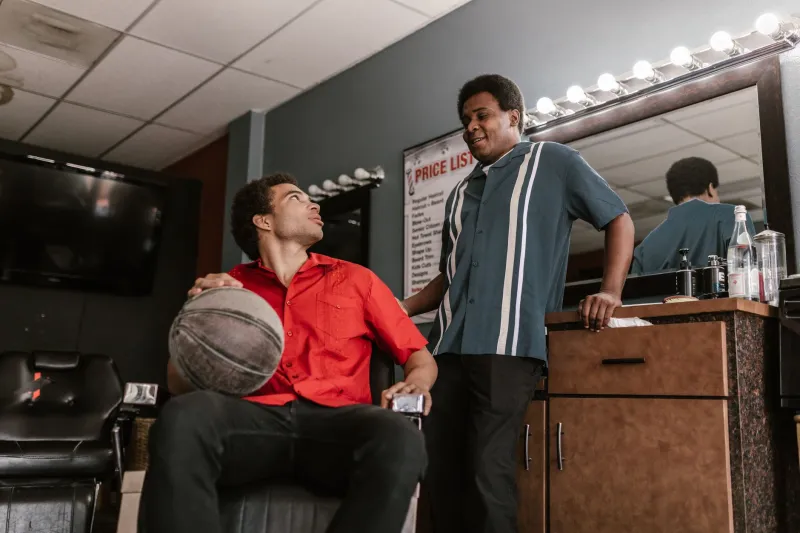
Photo by Photo by Tanya Barrow on Unsplash on Unsplash
There was nothing fancy about the counter stool. It was vinyl, probably cracked along one seam, and it spun if you pushed it the right way. The coffee came in a thick ceramic mug and it was refilled without being asked. The menu was laminated and hadn't changed much since the Eisenhower administration. And the person sitting two stools down from you might be a retired schoolteacher, a plumber on a lunch break, or the guy who owned the hardware store on the next block.
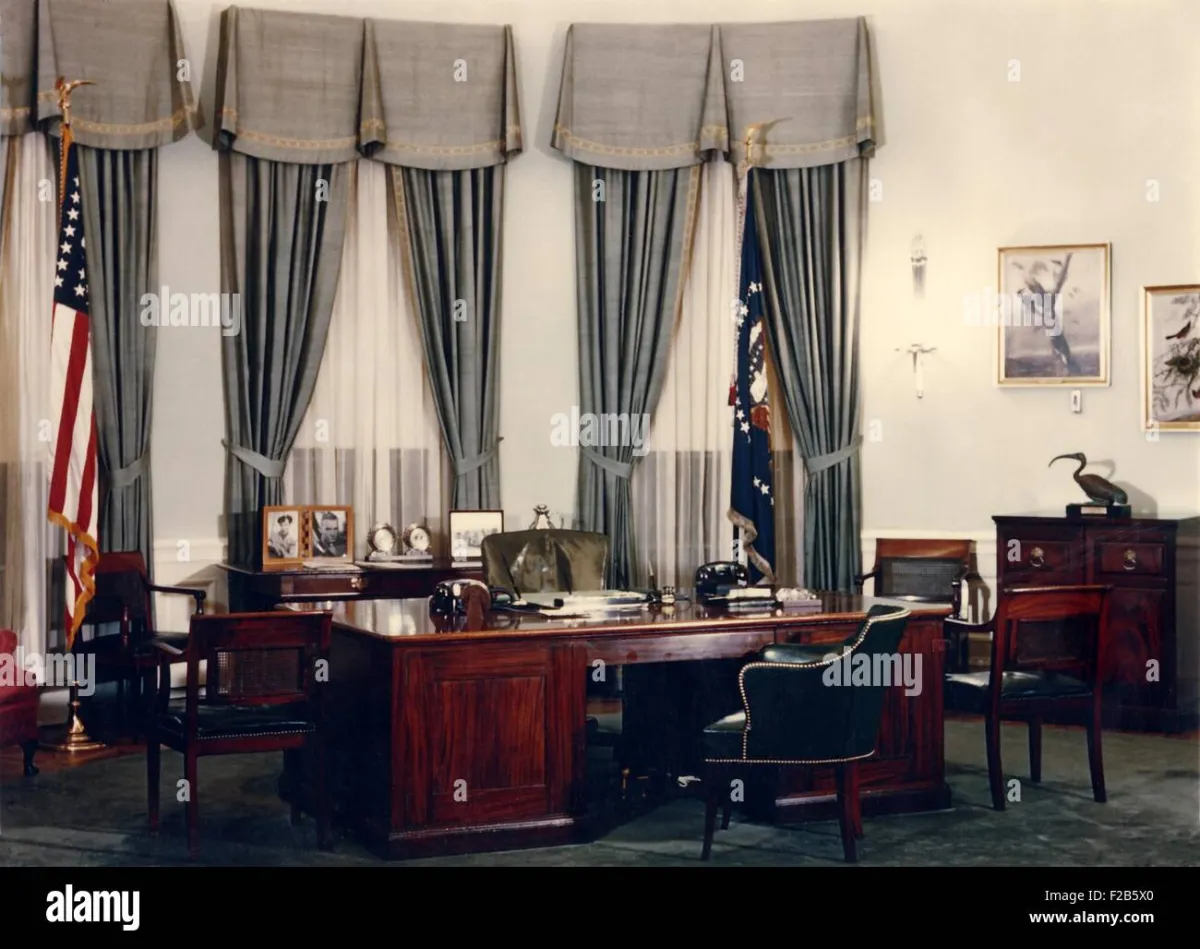 Photo: Eisenhower administration, via c8.alamy.com
For much of the twentieth century, this was a scene that repeated itself millions of times a day across America. The local diner — the lunch counter, the greasy spoon, the short-order joint — was one of the most genuinely democratic spaces in American public life. Not because anyone planned it that way, but because the economics and the culture conspired to make it so.
The Accidental Equalizer
The American diner didn't set out to be a social institution. It set out to sell eggs and coffee to people who needed eggs and coffee quickly and cheaply. But in accomplishing that modest goal, it created something that's harder to replicate than it looks: a shared physical space where people of genuinely different backgrounds occupied the same territory, ate the same food, and occasionally talked to each other.
The price point was the foundation of it. A diner meal in the postwar decades cost roughly the same whether you were a factory worker from the south side or a junior executive from the office park on the edge of town. The menu didn't have a premium tier. There was no section of the room that cost more to sit in. The blue plate special was the blue plate special, and it fed everyone who ordered it.
Geography reinforced the economics. Diners were neighborhood institutions, and American neighborhoods in the mid-twentieth century — while deeply segregated along racial lines in ways that deserve their own reckoning — were often economically mixed in ways that today's residential patterns are not. The diner on Main Street served the people who worked and lived within walking distance, and those people represented a broader economic range than the clientele of most modern restaurants.
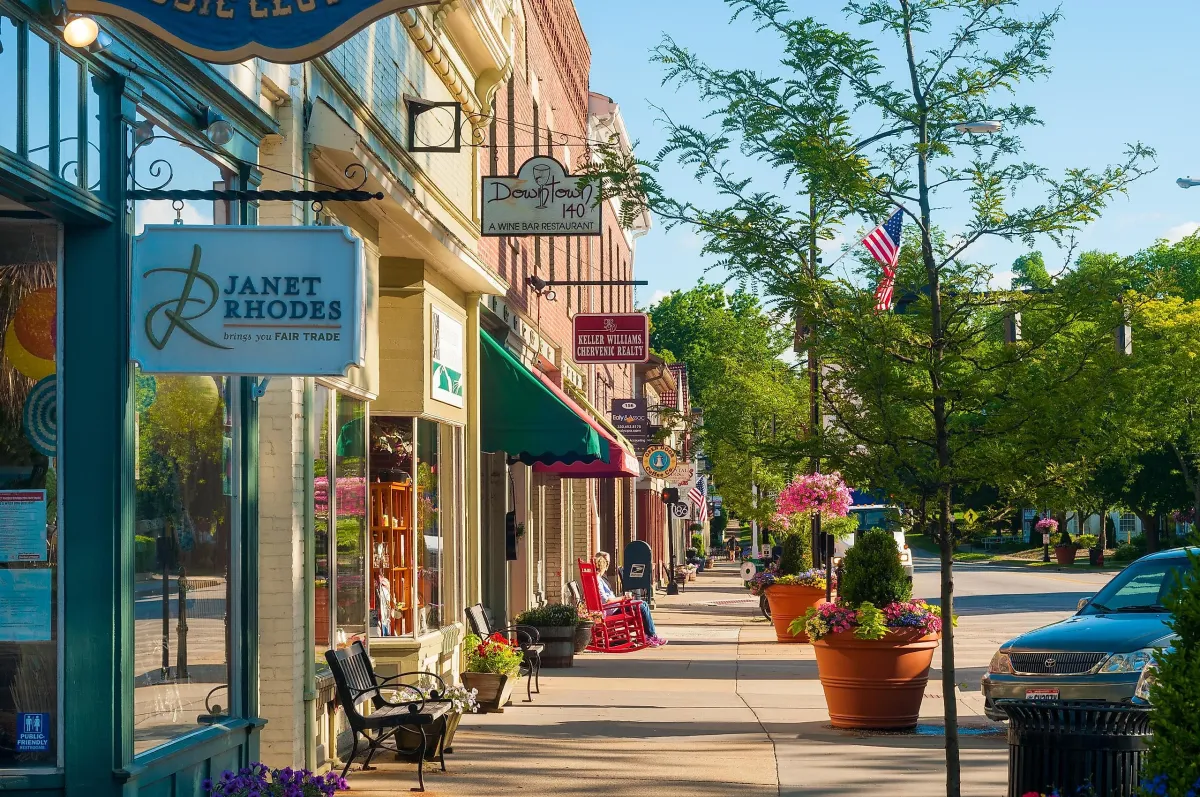 Photo: Main Street, via www.worldatlas.com
What Happened to the Counter
The decline of diner culture in America tracks several converging forces, none of them entirely responsible on their own.
Fast food arrived in the 1950s and accelerated through the 1960s and 1970s, offering something faster and cheaper than even the diner could match. The interstate highway system pulled traffic away from Main Street and toward the interchange, where the chain restaurants set up shop. Suburban sprawl dispersed the walkable neighborhood populations that had kept corner diners alive. And rising real estate values in desirable urban areas made it economically impossible for a low-margin lunch counter to hold onto its lease.
By the 1980s and 1990s, the classic American diner was already a nostalgic concept as much as a living institution. The ones that survived often did so by leaning into the nostalgia — chrome fixtures, jukeboxes, a retro aesthetic that transformed a functional eating place into a themed dining experience. The thing they were imitating was still out there, but increasingly hard to find.
The Sorted Food Landscape
What replaced the diner wasn't a single thing. It was a fragmentation — a splintering of the American food experience into dozens of distinct categories organized by price, dietary philosophy, cultural identity, and delivery method.
Today's food landscape has a tier for every income bracket and a niche for every preference. There are fast-casual chains positioned precisely between fast food and sit-down dining, each one calibrated to a specific demographic. There are farm-to-table restaurants where the sourcing of the ingredients is as much a part of the experience as the food itself. There are meal kit delivery services, ghost kitchens, app-based delivery platforms that aggregate dozens of restaurant options into a single interface you browse from your couch.
None of this is inherently bad. The food is often better, more varied, and more reflective of the genuine diversity of American culture than the diner menu ever was. But the sorting that comes with it has a social cost that doesn't show up on any receipt.
When your food choices are filtered through an app that knows your income, your neighborhood, and your dietary preferences, the odds of ending up at the same counter as someone whose life looks nothing like yours drop considerably. The factory worker and the bank manager are eating different things, ordered through different platforms, consumed in different spaces — or, increasingly, alone at home.
The Conversation That Doesn't Happen
There's a specific kind of social exchange that the diner counter made possible and that almost nothing in the modern food landscape replicates. It was the conversation between strangers who hadn't chosen each other — who were simply adjacent, eating the same meal, with a few minutes to fill before the check arrived.
Those conversations weren't always profound. They were often about the weather, the local sports team, a complaint about traffic. But they were a form of low-stakes civic contact that kept people loosely tethered to the reality of other people's lives. You knew the plumber had a bad knee because you'd sat next to him enough times to hear about it. You knew the retired schoolteacher's granddaughter had just started college because she'd mentioned it over pie.
This kind of ambient social knowledge — the background radiation of shared public space — is harder to manufacture than a good breakfast sandwich. It requires a place where people who haven't opted into each other's company end up together anyway.
The Stool Is Still There, Somewhere
The American diner hasn't entirely vanished. In certain cities and certain towns, the real thing still exists — no theme, no Instagram aesthetic, just a counter and a cook and coffee that keeps coming. These places tend to inspire a loyalty that's slightly disproportionate to what they're actually selling, which suggests that what people are really loyal to is the experience of being somewhere genuinely public.
The blue plate special is still out there if you know where to look. But finding it requires a little more effort than it used to — and that effort itself says something about how thoroughly America has reorganized its public life around the idea that you should always be exactly where you chose to be, surrounded by exactly who you chose to be with.
Sometimes the best conversations start on a stool next to a stranger. It's just that fewer of us are sitting down long enough to find out.