The Guy Who Knew Where Every Bolt Lived: What America Lost When the Neighborhood Hardware Store Closed
Somewhere in the back of your memory — or maybe your parents' memory — there's a man in a canvas apron standing behind a wooden counter. He's got sawdust on his boots and a pencil tucked behind one ear. You walk in with a broken hinge, a vague description of a rattling pipe, or a sketch on a napkin, and within two minutes he's already walking you to exactly the right shelf. You didn't need to know what you needed. He did.
That man was the backbone of the American neighborhood hardware store. And he's almost entirely gone.
A Different Kind of Expert
For most of the twentieth century, independent hardware stores were less like retail shops and more like neighborhood clinics for broken things. The people who staffed them weren't hired off a job board and trained on a register. They were tradespeople, retired contractors, former plumbers, and lifelong tinkerers who had spent decades learning how houses actually worked.
When you walked in with a problem, you got a conversation. The staffer would ask how old your house was, what material your pipes were made of, whether the leak appeared after it rained or only when someone ran the upstairs shower. They'd pull out a washer, a length of copper tubing, or a specific grade of wood filler and explain not just what to buy — but why, and how to use it properly.
This was free education delivered at the point of need. No appointment required.
Small-town hardware stores in particular became informal community institutions. Regulars would stop in not just to pick up supplies but to troubleshoot a project, compare notes on a recent renovation, or get a second opinion before calling a contractor. The store was a hub of practical knowledge, and the staff were its curators.
The Big-Box Disruption
The arrival of Home Depot in the late 1970s and Lowe's expansion through the 1980s and 1990s changed everything. The pitch was simple and genuinely appealing: more products, lower prices, one location. Where a neighborhood hardware store might stock three varieties of exterior paint, the new giants offered forty. Where the local shop carried one brand of power drill, the warehouse had an entire aisle.
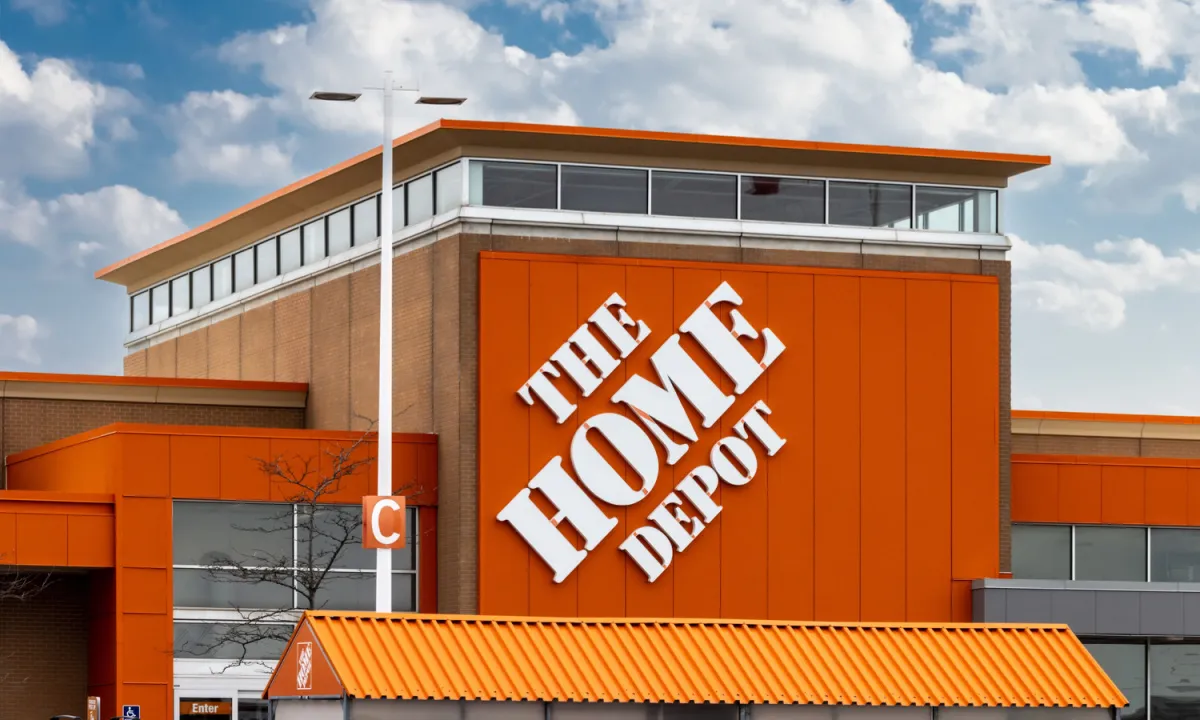 Photo: Home Depot, via www.pymnts.com
For a certain kind of shopper — one who already knew exactly what they needed — it was a revolution. But for the homeowner standing in front of a burst pipe on a Saturday morning with no idea what they were looking at, the experience was something else entirely. Acres of inventory, color-coded sections, and the occasional orange-aproned employee who, through no fault of their own, had been trained in customer service rather than construction.
The independent stores couldn't compete on price or selection, and thousands closed across the country throughout the 1990s and 2000s. The National Hardware Show, once a celebration of small-scale retail ingenuity, watched its exhibitor base shift dramatically toward big-box suppliers.
What disappeared wasn't just the stores. It was the accumulated expertise living inside them.
The Knowledge Gap Nobody Talks About
Here's what that loss looks like in practice today. A homeowner notices water damage near a window frame. They drive to their nearest home improvement warehouse, describe the problem to whoever they can find, and walk out with a tube of caulk and a vague sense of confidence. Six months later, the damage is worse because the caulk addressed the symptom, not the source — a flashing issue that someone with real building knowledge would have identified immediately.
This scenario plays out constantly across the country. The American homeownership rate remains high, but the practical knowledge required to maintain a home has never been lower. Studies from the home improvement industry consistently show that younger homeowners are far less likely than previous generations to attempt even basic repairs themselves — not because they're unwilling, but because they genuinely don't know where to start.
YouTube has stepped into part of this gap, and honestly, some of it is excellent. Channels dedicated to plumbing, electrical basics, and carpentry have millions of subscribers and have genuinely helped people attempt repairs they'd otherwise have outsourced. But a video can't look at your specific situation, ask the right follow-up questions, or tell you that the approach you're about to take won't work on a 1960s house with knob-and-tube wiring.
The result is a two-tier system. Confident, experienced homeowners navigate the big-box stores effectively and supplement their knowledge online. Everyone else either calls a contractor — whose rates have risen substantially as demand has increased — or attempts a repair that makes the problem worse.
A Few Survivors, and What They Tell Us
A handful of independent hardware stores still operate across the country, and the ones that have survived did so largely by doubling down on exactly what the big-box model abandoned: expertise. Stores like Burt's Hardware in Massachusetts or McGuckin Hardware in Boulder, Colorado, have built loyal customer bases not by competing on price but by maintaining staff who genuinely know what they're talking about.
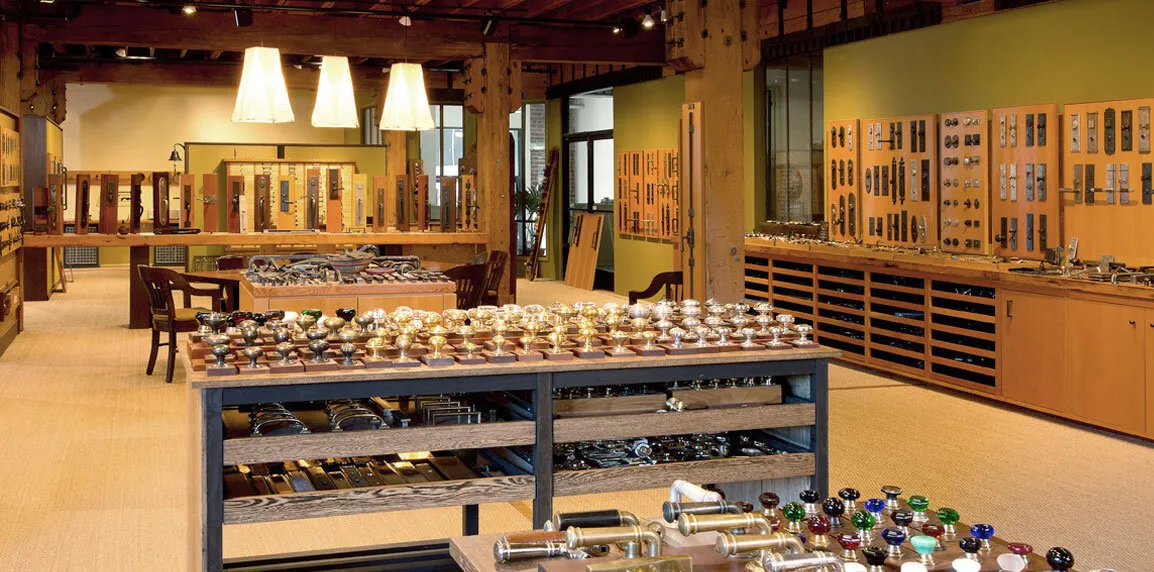 Photo: Burt's Hardware, via images.squarespace-cdn.com
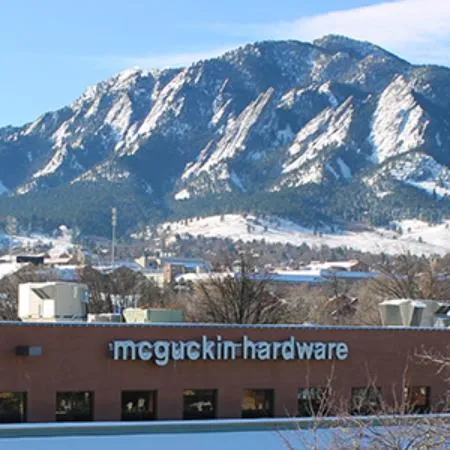 Photo: McGuckin Hardware, via media-cdn.tripadvisor.com
Customers will drive past two Home Depots to reach these places. They'll pay a little more for a product if it comes with a ten-minute conversation that actually solves their problem. The demand for that experience never went away. The supply of it nearly did.
What We Actually Lost
It's easy to frame this as simple nostalgia — a fondness for the old neighborhood shop that ignores the real benefits of modern retail. And those benefits are real. The selection is better, the prices are lower, and the convenience is undeniable.
But the hardware store expert represented something that didn't have an obvious line item in the retail economics: the transfer of practical knowledge across generations. When you learned from the man behind the counter how to properly seat a washer or why you needed to use a primer before painting over water damage, you carried that knowledge into your next project. And the one after that.
The big-box model optimized for the transaction. The old hardware store optimized for the customer's capability. Those are very different goals, and only one of them made you better at owning a house.
Somewhere along the way, America traded a lifetime of practical wisdom for a bigger parking lot. The parking lot is genuinely more convenient. But it doesn't know anything about your pipes.