The Cold Chain Revolution: When America's Ice Men Delivered Winter to Every Kitchen Door
Open your refrigerator today and you're accessing a miracle so commonplace that most Americans never think about it. That steady 38-degree temperature, maintained 24 hours a day without any effort on your part, represents one of the most dramatic technological shifts in human history. But just 100 years ago, keeping food cold required an entirely different kind of infrastructure—one that employed hundreds of thousands of workers and turned ice into one of America's most essential commodities.
The icebox era wasn't just a primitive version of modern refrigeration. It was a sophisticated system that connected frozen lakes in Maine to kitchen tables in Texas, creating America's first truly national supply chain.
The Harvest That Happened in Winter
Every winter, across the frozen lakes and ponds of New England, crews of ice harvesters performed one of America's most crucial seasonal jobs. Using specialized tools that looked like giant plows, they would score the ice into perfect rectangular blocks, each weighing between 50 and 100 pounds.
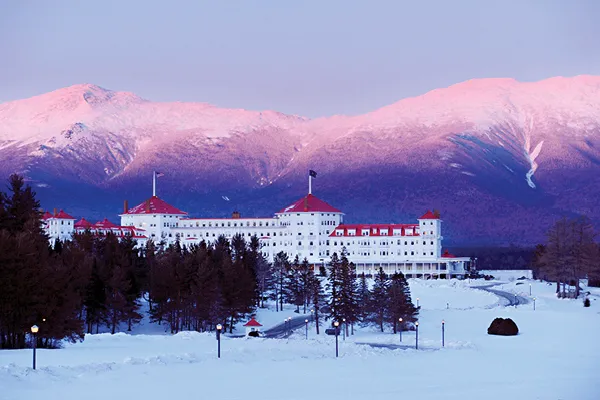 Photo: New England, via i.gocollette.com
This wasn't random cutting—ice harvesting was a precise science. Harvesters knew exactly when ice reached the optimal thickness (usually 12-18 inches), how to cut blocks that would stack efficiently, and how to transport tons of frozen water without losing too much to melting.
The scale was staggering. A single large operation might harvest 100,000 tons of ice in a good winter, enough to supply entire cities through the following summer. Ice houses, massive insulated warehouses filled with sawdust and hay, could preserve these frozen blocks for months.
The Network That Brought Winter South
What made the ice industry remarkable wasn't just the harvesting—it was the distribution network that followed. Refrigerated railroad cars, insulated with cork and packed with ice, could transport frozen blocks thousands of miles. Ice companies established depots in every major city, creating a supply chain that rivaled anything we see today.
Local ice dealers became essential figures in American neighborhoods. They knew which households used ice for medical purposes (keeping medicines cool), which families had the largest iceboxes, and how much ice each customer typically needed based on family size and cooking habits.
The delivery routes were precisely choreographed. Ice wagons would start their rounds before dawn, when temperatures were coolest, following optimized paths that minimized travel time between customers. Drivers carried massive ice tongs and thick leather aprons, hauling heavy blocks up flights of stairs and into kitchen iceboxes with remarkable efficiency.
The Ingenious Engineering of the Icebox
The iceboxes themselves were marvels of 19th-century engineering. Unlike modern refrigerators that use electric cooling, iceboxes relied on physics and smart design to maintain cold temperatures.
The best iceboxes featured double-wall construction with insulation between the walls, drain systems to handle melting ice, and carefully designed air circulation that kept cold air flowing throughout the storage compartment. The ice compartment was always at the top, allowing cold air to naturally sink down and cool the food storage areas below.
Families learned to pack their iceboxes strategically. Items that needed the coldest temperatures went closest to the ice compartment. Vegetables were stored in specific drawers designed to maintain optimal humidity. Milk and other dairy products had designated spots that balanced accessibility with temperature control.
The Daily Rhythm of Ice-Dependent Living
Living with an icebox created routines that shaped daily life in ways modern families can barely imagine. Housewives (and it was almost always housewives) had to plan meals around ice delivery schedules. Running out of ice meant spoiled food, so managing your ice supply became a crucial household skill.
Families developed elaborate systems for indicating their ice needs to delivery drivers. Ice cards placed in windows showed how many pounds were needed. Some households used specific window arrangements or door signals to communicate with their ice man without having to be home during delivery.
The rhythm of ice delivery created its own social fabric. Ice men often became trusted figures in their neighborhoods, sometimes serving as informal message carriers between households or checking on elderly customers who might need assistance.
The Silent Revolution of Electric Cooling
Electric refrigeration didn't arrive overnight—it gradually displaced the ice industry over several decades. Early electric refrigerators were expensive and unreliable, often costing as much as a car. Many families used both systems simultaneously, keeping an electric refrigerator for everyday use and maintaining an icebox for extra storage or backup cooling.
The transition accelerated dramatically after World War II. Mass production brought refrigerator prices down, while expanding electrical grids made reliable power available to more American homes. By 1950, most new homes were built with electrical outlets specifically designed for refrigerators, and the icebox began its slide into obsolescence.
What disappeared along with the ice industry was more than just a delivery service—it was an entire ecosystem of seasonal employment, regional specialization, and community relationships built around a shared need for cold storage.
The Infrastructure We Forgot
Today's refrigeration system seems simpler because it's invisible. We plug in an appliance and forget about it until it breaks. But our modern cold chain—from refrigerated trucks to climate-controlled warehouses to home freezers—is actually far more complex than the ice industry ever was.
The difference is that today's system runs on electricity and automation rather than human labor and seasonal harvesting. We've traded the visible complexity of ice delivery routes for the hidden complexity of power grids, manufacturing supply chains, and repair networks.
When your refrigerator breaks today, you call a repair service and wait for parts to arrive from distant factories. When an icebox stopped working properly, the solution was usually as simple as adjusting a drain or adding more insulation—fixes that most homeowners could handle themselves.
The Resilience We Traded Away
The ice industry created a kind of resilience that modern refrigeration lacks. If the power went out, your icebox kept working as long as you had ice. If your local ice dealer went out of business, other suppliers could usually fill the gap quickly.
Modern refrigeration is more convenient but also more fragile. A power outage lasting more than a few hours can spoil hundreds of dollars worth of food. Supply chain disruptions can make replacement parts unavailable for weeks.
The ice men who once climbed stairs with 75-pound blocks on their shoulders represented more than just a delivery service—they were part of a system that connected American families directly to the natural world, to seasonal rhythms, and to their local communities in ways that our current appliance-dependent culture has largely forgotten.
In our quest for convenience and efficiency, we've created systems that work better than anything our grandparents could have imagined—until they don't. The ice industry's greatest lesson might not be about refrigeration at all, but about building systems that remain human-scale, locally connected, and resilient enough to survive when the power goes out.