When the Night Was the Point: The Long, Unhurried Evening That Live Entertainment Used to Be
Picture a Tuesday evening in 1958. A couple gets dressed — actually dressed, the kind of effort that signals something important is happening — and drives downtown to the local auditorium. They arrive early enough to read the full program, find their seats, and settle in. The show begins, runs for an hour, and then stops. The lights come up, people rise and stretch, conversations start across rows, drinks are poured at a lobby bar, and for twenty minutes the room hums with the particular pleasure of being in the middle of something worth talking about.
Then the second half begins. By the time they drive home, it's late, and that feels right. The evening was supposed to take a while. That was the whole idea.
The Architecture of an Evening
For much of American entertainment history, a night out was designed as an extended social event rather than a content delivery mechanism. Vaudeville shows from the early twentieth century could run three hours or more, featuring a rotating sequence of comedians, singers, dancers, and novelty acts that kept audiences engaged through variety rather than intensity. The intermission wasn't a logistical pause — it was a built-in social chapter, a moment for the audience to participate in the event rather than simply receive it.
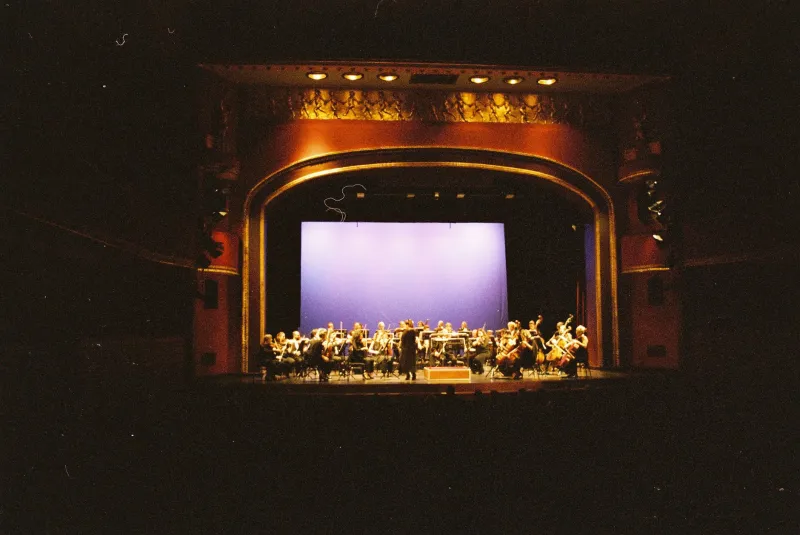
Classical music concerts maintained this tradition well into the mid-twentieth century. A standard symphonic program typically featured two or three substantial works separated by a proper intermission, and audiences were expected — and genuinely wanted — to spend that break discussing what they'd heard. The lobby conversation was considered part of the experience.
Even rock and roll, in its early arena years, often featured elaborate opening acts that were genuine performances in their own right, not warm-up filler. Touring packages in the 1960s and 1970s sometimes put three or four credible artists on the same bill. You weren't just going to see one band. You were going to spend an evening in music.
The Compression Begins
The shift happened gradually, driven by a combination of economic logic and changing audience expectations. As live music became increasingly big business through the 1980s and 1990s, promoters began scrutinizing every aspect of the concert experience through a revenue lens. Longer shows meant longer venue holds, higher staffing costs, and fewer total events per year. The intermission — that beautiful, unmonetized pause — became a scheduling inefficiency.
Opening acts shortened. Intermissions were trimmed or eliminated. The headline performance was tightened. By the 2000s, the standard arena concert had settled into a recognizable format: one brief opening act, a twenty-minute changeover, ninety minutes of headliner, done. The whole thing packaged to fit neatly into a window that got everyone home by ten-thirty.
Broadway held on longer than most, and still maintains its intermission tradition — though even there, producers have been known to eliminate the break for certain productions in the name of momentum. But the broader American live entertainment landscape had already moved decisively toward efficiency.
Ticket prices, meanwhile, went in the opposite direction. The compressed, streamlined show now costs dramatically more than the unhurried evening it replaced. Audiences are paying more for less time and less ceremony, and most have simply accepted this as the natural state of things.
What the Intermission Actually Did
It's worth being specific about what was lost, because the intermission wasn't just a bathroom break with better lighting.
It was a conversation starter built into the event itself. You had something specific to discuss — the first half — and a defined window in which to discuss it, surrounded by strangers who had just shared the same experience. This created a particular kind of social interaction that's genuinely difficult to replicate. Concerts used to be places where you might meet someone interesting in the lobby and talk about music for twenty minutes. That doesn't happen when there's no lobby moment.
It also created a sense of structure and occasion that shaped how audiences dressed, behaved, and valued the experience. When a night out had multiple chapters — arrival, first act, intermission, second act, departure — it felt like an event with weight and intention. The pacing communicated that what was happening mattered enough to take its time.
And practically speaking, the intermission gave performers a genuine break and a reset point. Long-form concerts with built-in pauses often produced more adventurous programming, because the structure allowed for variety and contrast. A show that must sustain intensity for ninety unbroken minutes tends toward a different — and often more formulaic — kind of performance.
The Festival Paradox
Interestingly, American audiences never stopped wanting the long, immersive experience. They just started finding it elsewhere.
The rise of music festivals — Coachella, Bonnaroo, Lollapalooza — represents, in some ways, a collective hunger for the extended evening that the standard concert abandoned. Festival-goers routinely spend twelve hours on a site, moving between stages, discovering new artists, and spending as much time socializing as listening. The festival has become the modern substitute for the multi-act evening, sprawled across an entire weekend rather than a single night.
But the festival experience is also expensive, logistically demanding, and increasingly corporate. It's not quite the same as walking downtown on a Tuesday, finding your seat in a comfortable hall, and letting a well-constructed evening unfold around you.
The Ceremony Worth Recovering
There are signs that some corners of the live entertainment world are quietly pushing back. Immersive theater experiences, jazz clubs with late-night second sets, and certain classical venues have leaned deliberately into the unhurried evening as a selling point. They've found that audiences will pay for — and deeply appreciate — an experience that treats their time as something to be filled richly rather than efficiently.
What those venues understand is something the old-school concert promoters knew instinctively: the ceremony surrounding a performance is part of the performance. The anticipation, the pause, the shared conversation, the sense that you are spending an evening rather than attending an event — these things shape how the music feels and how long you carry it with you afterward.
The night used to be the point. There's no reason it can't be again.