Your Car's Best Friend: When Neighborhood Mechanics Were Family and Vehicles Lasted Generations
The Corner Shop That Knew Your Engine's Heartbeat
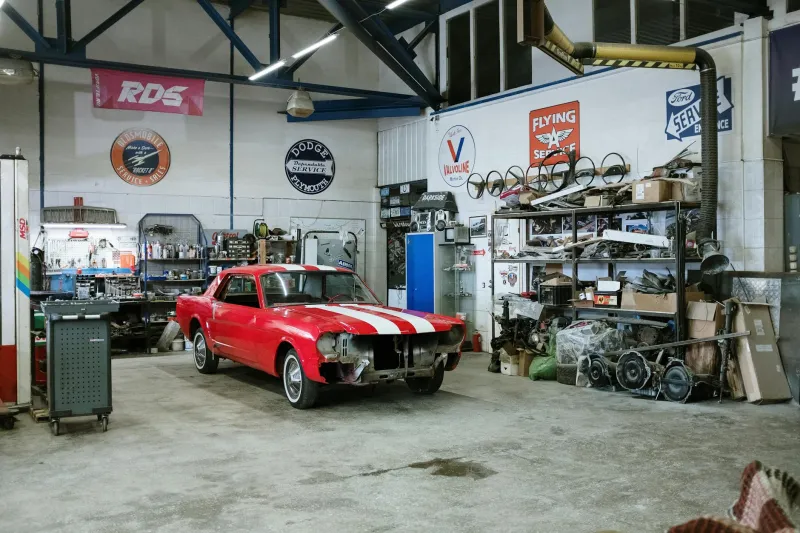
In 1975, when your Chevy Nova started making that peculiar clicking sound, you didn't need to Google "automotive diagnostic centers near me." You drove three blocks to Eddie's Garage, where Eddie himself would pop the hood, listen for thirty seconds, and announce: "Sounds like your lifters are getting chatty. I'll have you sorted by Thursday."
 Photo: Chevy Nova, via ei.phncdn.com
Eddie knew your car because he'd been working on it for eight years. He remembered when you brought it in as a teenager with your dad, and he'd watched it accumulate battle scars, oil stains, and character. More importantly, Eddie knew that your particular Nova had a temperamental carburetor that needed adjustment every spring and a transmission that preferred a specific brand of fluid.
This was America's automotive ecosystem for most of the 20th century: neighborhood mechanics who built relationships with cars and their owners that lasted decades.
When Diagnosis Meant Experience, Not Computers
The modern automotive service experience begins with a $150 diagnostic fee and a computer that speaks in error codes. A technician plugs a device into your car's brain, prints out a report filled with acronyms, and presents you with an estimate that might exceed your car's value.
But Eddie didn't need a computer to tell him what was wrong with your engine. He could diagnose problems by sound, smell, and feel. The way your engine idled told him about your timing. The color of your exhaust revealed secrets about your combustion. The feel of your brake pedal under his foot spoke volumes about your hydraulic system.
This wasn't magic—it was accumulated wisdom. Eddie had worked on thousands of cars, most of them variations on familiar themes. A 1970s American V8 engine was essentially the same animal whether it lived in a Ford, Chevy, or Plymouth. Master the fundamentals, and you could keep them running almost indefinitely.
Today's vehicles are marvels of engineering complexity. A modern car contains more computing power than the Apollo spacecraft, with dozens of interconnected systems monitoring everything from tire pressure to engine temperature. This sophistication has made cars more reliable and efficient, but it's also created a barrier between drivers and the people who service their vehicles.
 Photo: Apollo spacecraft, via i0.wp.com
The Economics of Keeping Things Running
Perhaps the most dramatic change lies in the economics of automotive longevity. In Eddie's era, keeping a car running for 200,000 miles wasn't just possible—it was expected. A $300 repair on a ten-year-old car made perfect sense when the vehicle was worth $2,000 and could reasonably be expected to run for another five years.
Eddie's labor rate might have been $15 per hour, and he could rebuild your engine for the cost of parts plus a weekend's work. He sourced components from local salvage yards, rebuilt what could be rebuilt, and improvised solutions when factory parts weren't available.
Today's automotive mathematics work differently. Modern cars are more reliable initially, but when they break, they break expensively. A transmission replacement can cost $4,000. Engine work often requires specialized tools and factory-certified technicians. Labor rates at dealerships can exceed $150 per hour.
The result is a cruel paradox: cars that are built to last longer often get scrapped sooner, not because they can't be fixed, but because fixing them doesn't make financial sense.
The Trust Economy vs. The Corporate Machine
Eddie's business model was built on trust and reputation. He lived in the neighborhood where he worked. His customers were also his neighbors, his kids' teachers, his poker buddies. Ripping someone off wasn't just bad business—it was social suicide.
This created a powerful incentive structure. Eddie's success depended on keeping customers happy over decades, not maximizing profit on individual transactions. He'd often spot potential problems during routine maintenance and fix them before they became expensive disasters. "While I'm in here," was a phrase that saved customers thousands of dollars over the years.
Modern automotive service operates in a different universe. Corporate service centers are accountable to shareholders, not neighbors. Technicians are often employees, not owners, with quotas and performance metrics that may not align with customer interests. The relationship is transactional rather than relational.
What We Gained and Lost in the Translation
None of this is to say that automotive progress has been entirely negative. Modern cars are safer, more efficient, and more reliable than their predecessors. A vehicle that starts every morning for 150,000 miles with nothing but oil changes was unimaginable in Eddie's era.
Environmental controls have eliminated the toxic cloud of leaded gasoline exhaust that once hung over American cities. Safety features that are now standard—airbags, crumple zones, electronic stability control—save thousands of lives annually.
But something valuable was lost in this transformation: the sense of automotive self-reliance that came from having a trusted mechanic who knew your car's history. The confidence that came from understanding your vehicle well enough to keep it running affordably for decades.
The Verdict of Progress
Eddie's world was built on scarcity and mechanical simplicity. Today's automotive landscape reflects abundance and technological complexity. Both systems have their merits, but they serve different values.
Eddie's approach maximized longevity and minimized waste, but at the cost of efficiency and safety. Modern automotive service maximizes convenience and capability, but often at the cost of affordability and personal connection.
Perhaps the real loss isn't just about cars and mechanics—it's about the broader shift from a repair culture to a replacement culture, from neighborhood relationships to corporate transactions, from knowing how things work to simply expecting them to work.
Eddie retired fifteen years ago. His shop is now a Starbucks. And somewhere in America, a driver is staring at a $3,000 repair estimate for a car that's worth $4,000, wondering what Eddie would have done.